
Buyer's Guide
How Much Roti Production Capacity Does a Commercial Kitchen Need?
A worked method for turning your kitchen's service volume into a target roti-per-hour figure, matched against ATHAK's real roti machine capacities from 300 to 2000 roti per hour.
Published 13 August 2026
Why “How Many Rotis Per Hour” Is the Right Question, Asked the Wrong Way
Most buyers start by asking how many rotis they serve in a day, then look for a machine rated near that number. That undersizes the machine, because roti demand doesn’t spread evenly across the day — it concentrates in service windows. A machine sized to your daily average will fall behind during your busiest hour, which is the only hour that actually matters for choosing capacity.
A Simple Method: Estimating Your Peak-Hour Number
Work out two numbers for your busiest single hour of service, not your full day:
- Covers served in that hour. How many diners, or how many catering plates, go out in your single busiest hour?
- Rotis per cover. How many rotis does an average order include?
Multiply them together. As a worked example only — not a claim about what any kitchen typically serves — if your busiest hour seats 150 covers and you plan on two rotis per cover, that’s 300 rotis in that hour. Run the same arithmetic with your own numbers; the method matters more than any example figure.
Matching Peak Demand to a Machine’s Rated Capacity
ATHAK’s roti and dough machinery states a roti-per-hour rating for every model, printed in the catalogue:
| Peak-hour requirement | Machine to consider | Rated capacity |
|---|---|---|
| Up to 500 roti/hour, roasting handled separately | Hand Press Machine | 500 roti/hour |
| Up to 1000 roti/hour, automatic pressing, roasting handled separately | Automatic Press Machine CP-1000 Pro | 1000 roti/hour |
| 300 to 1000 roti/hour, pressing and roasting in one machine | Automatic Roti Making Machine — Eco Series (4 models) | 300 / 500 / 700 / 1000 roti/hour |
| 500 to 2000 roti/hour, heavier-duty pressing and roasting in one machine | Automatic Roti Making Machine — PRO Series (4 models) | 500 / 700 / 1000 / 2000 roti/hour |
If your peak-hour figure lands between two models, round up rather than down — the next section explains why.
Buy Above Your Peak, Not At It
A machine rated for exactly your peak-hour number leaves no room for a busier-than-usual service, a delayed start, or routine cleaning and maintenance time within the shift. Sizing with headroom above your calculated peak — rather than exactly matching it — is standard practice for any piece of production equipment running against a service deadline, not a claim specific to any one machine here. Where your number sits close to two adjacent models, the larger one buys you that margin.
The Line Behind the Press Has to Keep Up Too
A roti machine’s rated capacity assumes dough balls arrive as fast as it can use them — and the stages feeding it don’t all run at the same pace:
- The Dough Ball Cutting Machine (Electric) portions dough at 1000-2500 pieces per hour, which comfortably outpaces even the S 2000 Pro’s 2000 roti/hour rating.
- Dough kneading runs in batches, not continuously. The Drum Type Dough Kneading Machine, for example, is listed with a 2-5 minute cycle for its smallest 7 KG batch and a 15-20 minute cycle for its 30 KG and 50 KG batches — so the real question is how many batches per hour your kneader can turn over, not just its maximum batch size.
If your press is rated well above what your kneading stage can realistically supply in batches per hour, the press will spend time waiting on dough. Size the kneader against the press, not just the press against your service volume — how to select a dough kneader works through this in more detail.
Headroom Has a Cost, Too
Rounding up protects your service, but it isn’t free. A larger model carries a higher equipment cost, a bigger footprint, and — at the top of the PRO Series — a jump from a 230V single-phase supply to a 415V three-phase one for the S 2000 Pro. Headroom above your calculated peak is worth paying for; headroom bought on a guess, without doing the peak-hour arithmetic first, is just extra cost and floor space. That’s the real reason to work through the method above rather than defaulting to the largest model on the page.
When One Machine Isn’t Enough
If your peak-hour figure exceeds 2000 roti/hour, or you’re running multiple service points that need roti at the same time, a single machine from this range won’t cover it alone. That’s a case for either multiple machines or a broader look at how your kitchen’s roti stage is laid out — worth discussing directly with ATHAK rather than guessing at a combination.
A Quick Reference
- Occasional or low volume, existing roasting setup: Hand Press Machine, 500 roti/hour.
- Higher pressing volume, existing roasting setup: Automatic Press Machine CP-1000 Pro, 1000 roti/hour.
- One machine for pressing and roasting, moderate volume: Automatic Roti Making Machine — Eco Series, 300 to 1000 roti/hour across four models.
- One machine for pressing and roasting, higher or heavier-duty volume: Automatic Roti Making Machine — PRO Series, 500 to 2000 roti/hour across four models.
For the automation trade-offs behind each of these tiers, see automatic vs semi-automatic roti machines, and for the full buying framework — power supply, gas burners, footprint — see how to choose a commercial roti making machine.
Once you have a peak-hour figure, request a quote with that number and ATHAK will confirm the model that fits it, with headroom.
Related Machinery
Machines Covered in This Guide
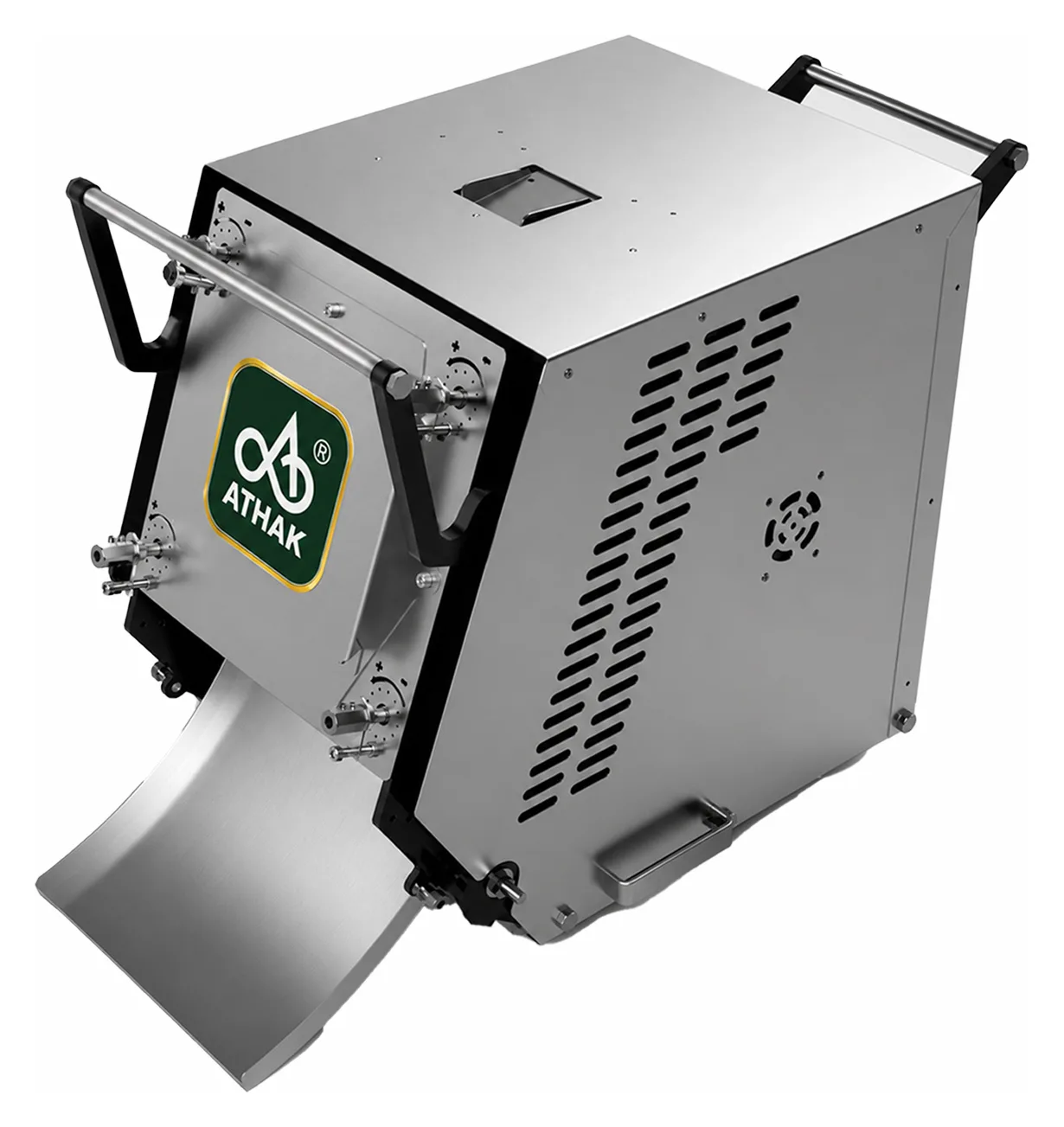
Hand Press Machine
Hand-operated roti press rated 500 ROTI per hour, with a 12mm*10inch ceramic coated plate and heavy duty pressing frame.
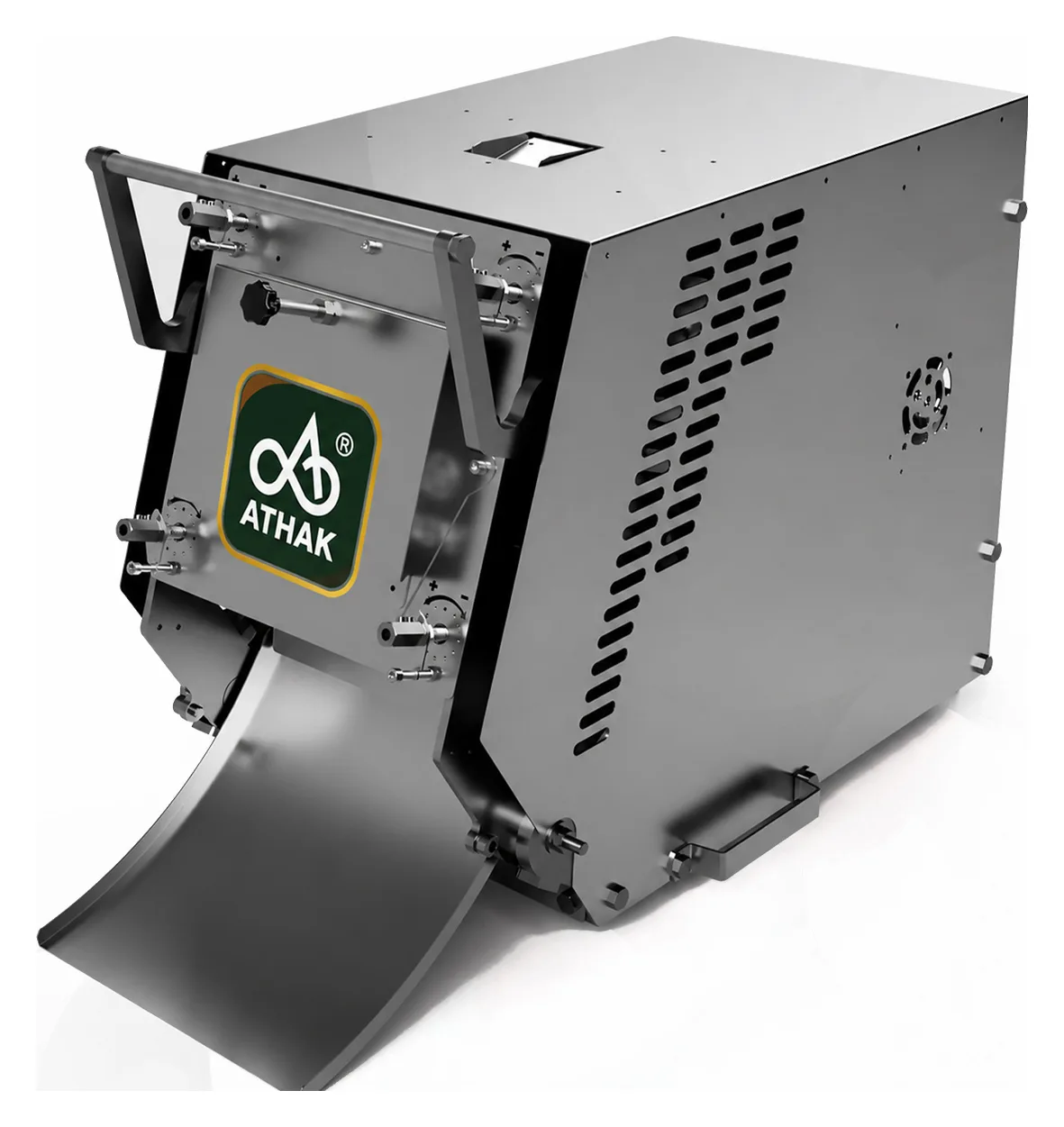
Automatic Press Machine CP-1000 Pro
Automatic roti press rated 1000 ROTI per hour, with a 14mm*10inch ceramic coated plate and 120W impulse motor.
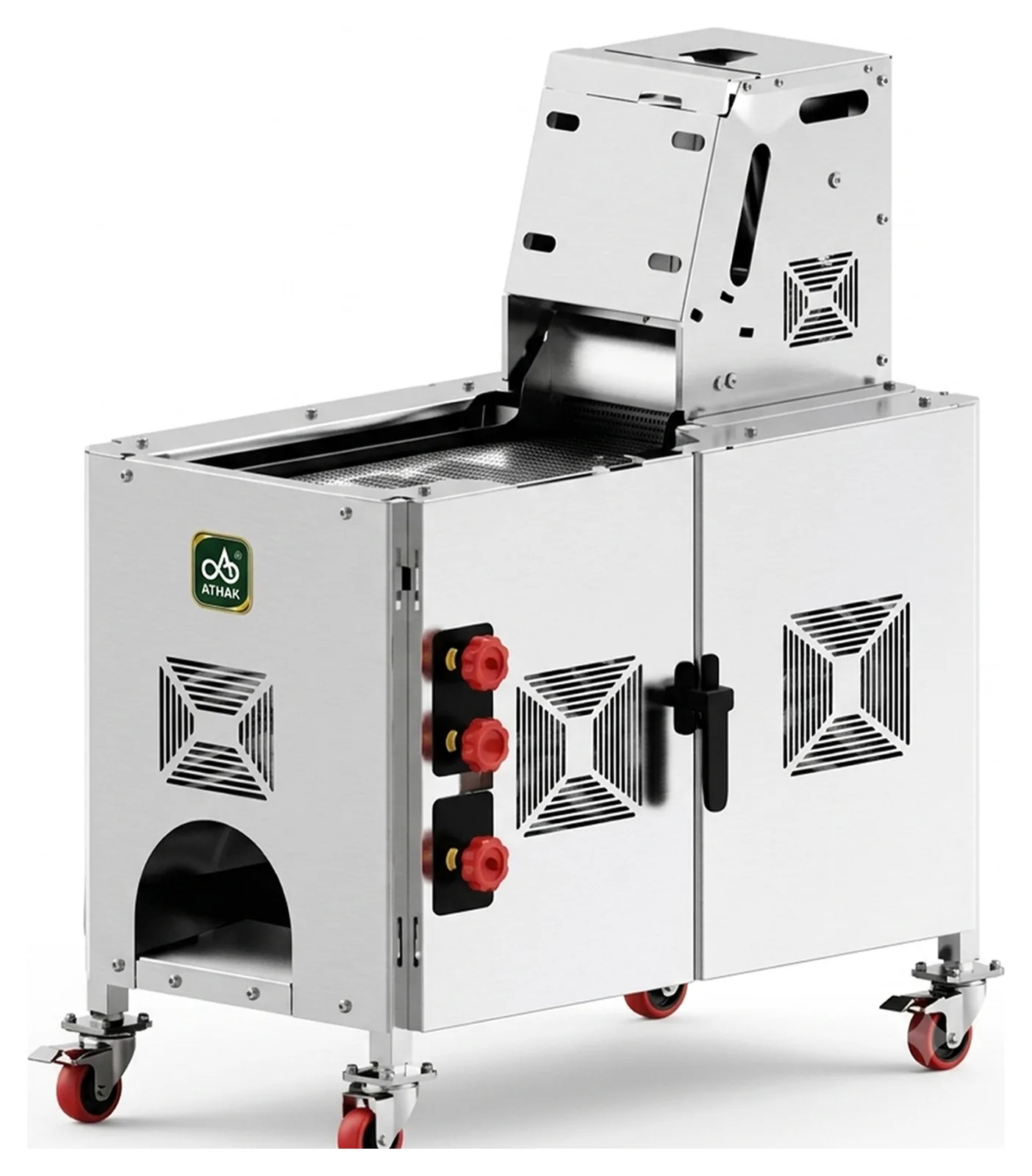
Automatic Roti Making Machine (Pressing + Roasting) – Eco Series
Eco series automatic roti machine pressing and roasting in one pass, in four models rated 300 to 1000 roti per hour.
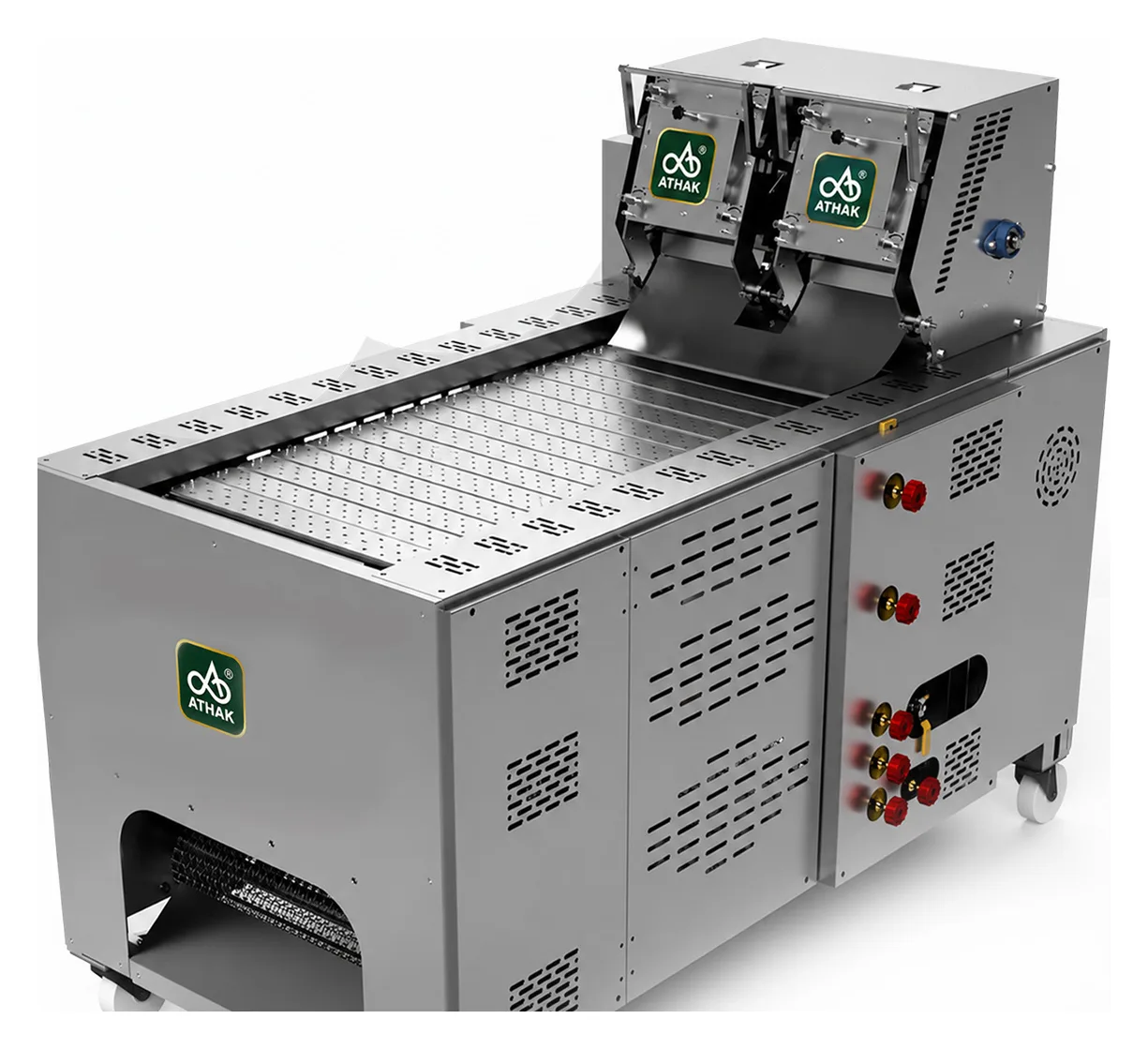
Automatic Roti Making Machine (Pressing + Roasting) – PRO Series
Automatic roti machine pressing and roasting in one pass, in four PRO models rated 500, 700, 1000 and 2000 roti per hour.
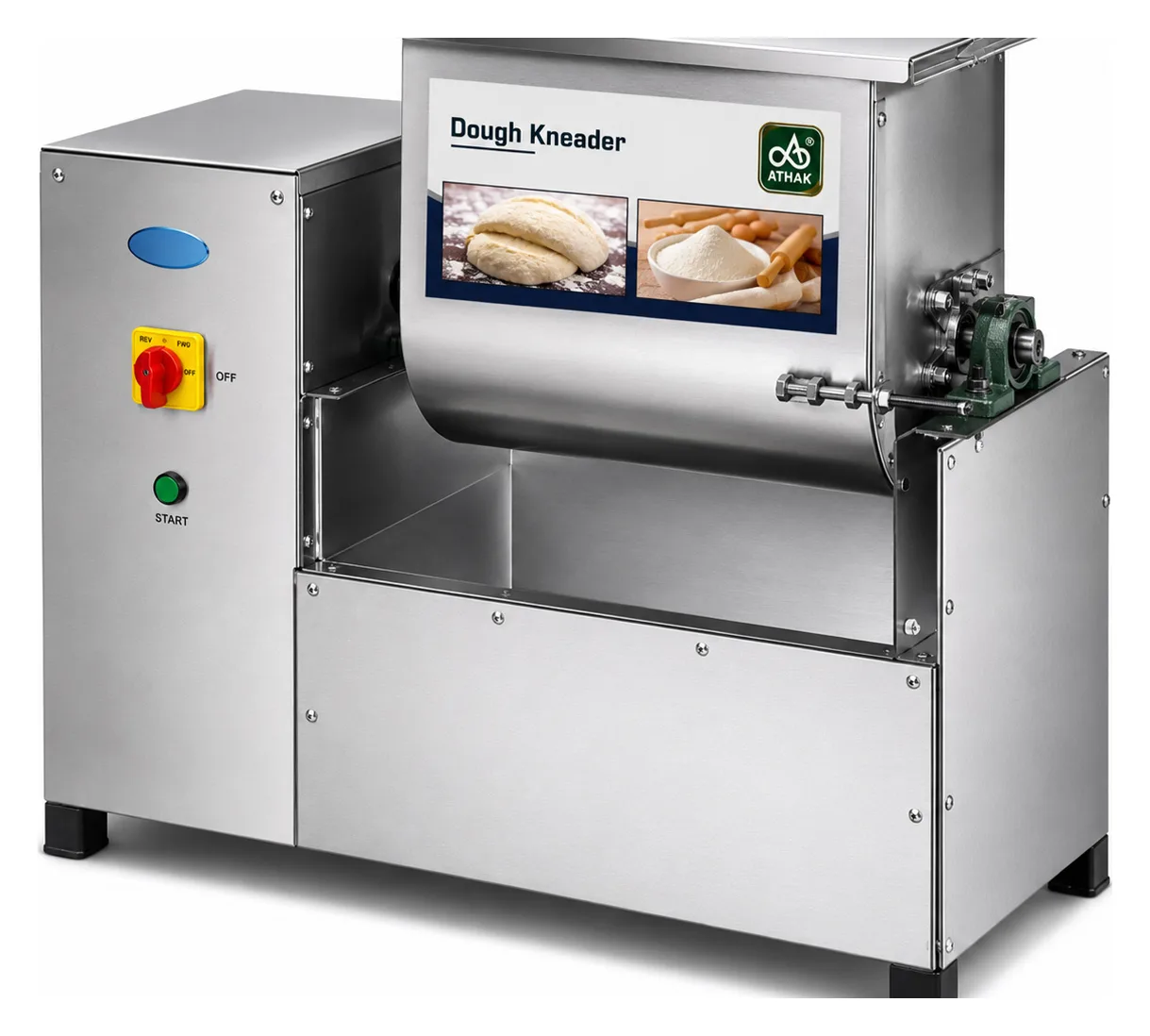
Drum Type Dough Kneading Machine
Enclosed drum kneader for dust-free, uniform dough, in five models from 7 KG to 50 KG batch size.
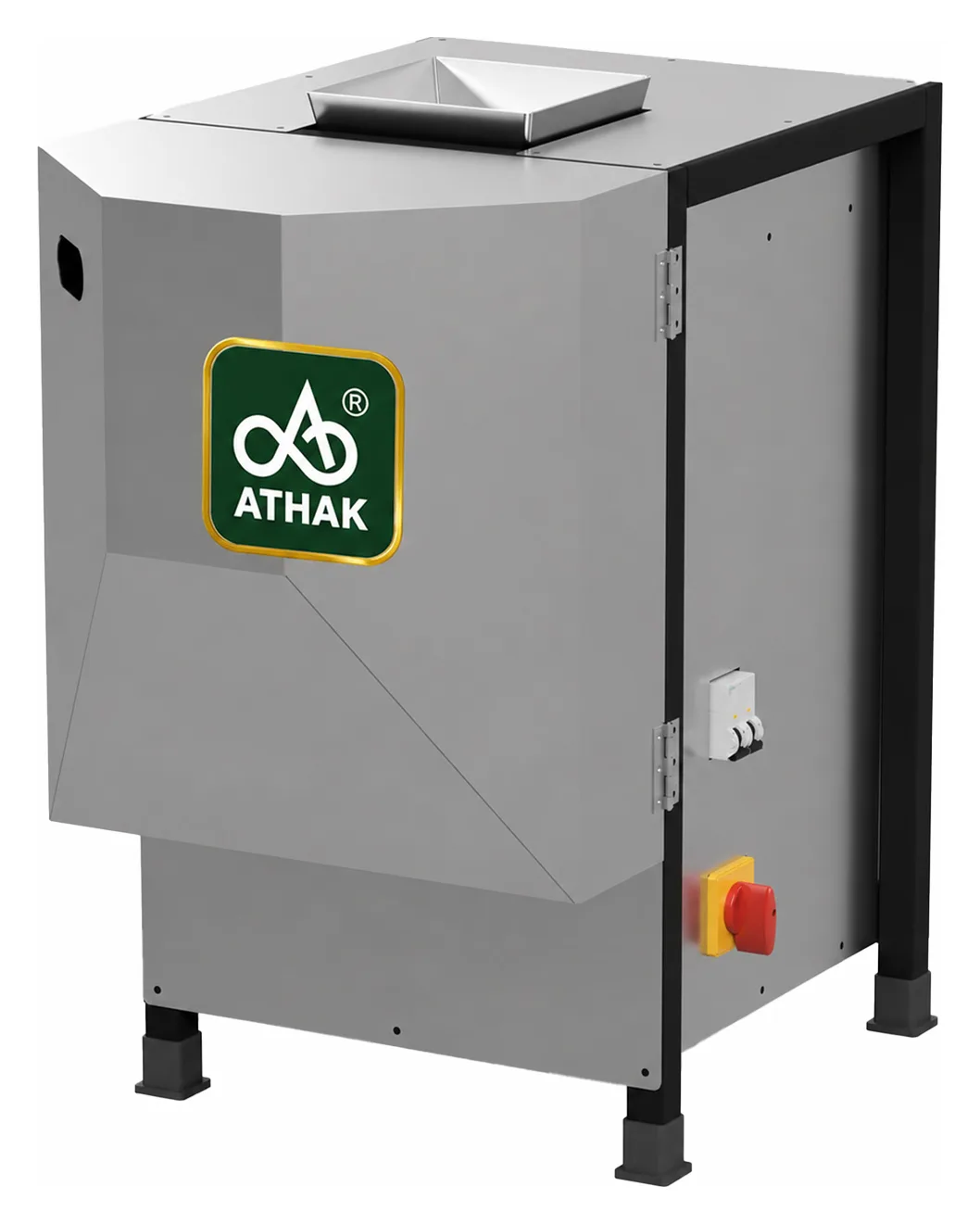
Dough Ball Cutting Machine (Electric)
Electric dough ball cutter portioning 1000-2500 pieces per hour at 20g to 50g ball size, on a 0.5 HP motor.
Browse the Family
Related Machine Categories
Ready to Talk Through Your Requirement?
Share what you need to produce and how much, and ATHAK will confirm the right machine and model.