
Buyer's Guide
How to Choose a Commercial Roti Making Machine
A practical framework for choosing a commercial roti machine — automation level, rated capacity, power supply and footprint — grounded in ATHAK's real roti and dough machinery range.
Published 13 August 2026
What a Roti Line Actually Does
Before comparing machines, it helps to separate the stages a roti actually passes through: flour is kneaded into dough, the dough is portioned into equal balls, each ball is pressed flat into a round, and the round is roasted. ATHAK’s roti and dough machinery range treats these as separable jobs — a dough kneading machine works the flour, a dough ball cutting machine portions it, a press shapes the round, and either a separate bhatti or an all-in-one machine handles the roasting. Knowing which stages you already have equipment for — and which you’re buying from scratch — is the real starting point, more useful than comparing machines by name alone.
Start With Automation Level, Not the Machine Name
ATHAK’s catalogue draws a clear line between hand-operated and automatic pressing. The Hand Press Machine is a lever-operated press — no motor is listed for the pressing action itself — rated at 500 roti per hour on a 12mm × 10 inch ceramic-coated plate. At the other end, the Automatic Press Machine CP-1000 Pro presses with a 120W impulse motor and speed control, rated at 1000 roti per hour on a larger 14mm × 10 inch plate. Automation level answers “how many hands do I need on this line,” which is a different question from “how many rotis do I need this hour” — covered further down. For a full comparison of the automation tiers ATHAK actually sells, see automatic vs semi-automatic roti machines.
One Machine or Two: Pressing and Roasting Together, or Apart
This is the decision that shapes everything else, and ATHAK sells both approaches:
- Pressing only, roasting separate. The Hand Press Machine and the Automatic Press Machine CP-1000 Pro both press rounds — bhakhri, chapati, puri, thepla — and hand off to a separate roasting appliance such as the Chapati Bhatti, available in four sizes by plate footprint. This suits a kitchen that already owns a bhatti or tawa setup, or wants pressing and roasting on separate lines for flexibility.
- Pressing and roasting in one pass. The Automatic Roti Making Machine — Eco Series and PRO Series carry the dough ball across an SS304 three-layer conveyor through pressing and roasting with no manual transfer between stages. This is the higher-throughput, lower-labour-touch option, at a higher footprint and cost for the single machine.
Neither is universally the right answer — it depends on whether you’re replacing an existing roasting setup or building a line from nothing, and how much floor space you can give to one larger machine versus two smaller ones.
Matching Rated Capacity to Your Kitchen
Every model in the range carries a roti-per-hour rating printed in the catalogue:
| Machine | Rated capacity |
|---|---|
| Hand Press Machine | 500 roti/hour |
| Automatic Press Machine CP-1000 Pro | 1000 roti/hour |
| Automatic Roti Making Machine — Eco Series | 300 to 1000 roti/hour across four models |
| Automatic Roti Making Machine — PRO Series | 500 to 2000 roti/hour across four models |
These are rated figures for the pressing-and-roasting stage itself — they assume dough balls arrive as fast as the machine can use them, which is why the kneading and portioning stages upstream matter just as much as the press. How much roti production capacity does a commercial kitchen need? works through sizing your own requirement against this table, including why you should size for your busiest hour rather than your daily average.
Power Supply: Single-Phase and Three-Phase
Every model in the Eco Series, and three of the four PRO Series models, run on a 230V single-phase supply, with wattage rising from 1800W on the smallest pressing-only Eco model to 4500W on the S 1000 Pro. The exception is the largest PRO model, the S 2000 Pro, rated at 2000 roti per hour on a 415V three-phase supply (4KW per phase). If a three-phase connection isn’t available at your site, that one fact rules the S 2000 Pro out regardless of how well its capacity fits your requirement — confirm your electrical supply before shortlisting the top of the range.
Gas Supply and Burner Count
Roasting runs on gas across both automatic series, and burner count scales with capacity. The Eco Series runs 3 to 6 burners, with gas consumption printed from 1-1.25 KG per hour on the smallest model to 2-2.5 KG per hour on the largest. The PRO Series runs 5 to 12 burners, with gas consumption printed at 1-1.5 KG per hour across the range. A 12-burner machine needs a correspondingly sized LPG connection and manifold — worth checking against your existing gas infrastructure before committing to the S 2000 Pro specifically.
Feeding the Line: Dough Ball Portioning
A press or automatic machine is only as fast as the dough balls reaching it. The Dough Ball Cutting Machine (Electric) portions kneaded dough at 1000-2500 pieces per hour in a 20g-50g ball size range on a 0.5 HP motor — comfortably ahead of even the S 2000 Pro’s 2000 roti/hour rating, so it’s rarely the bottleneck in a line. The more common constraint sits one stage further back, in dough kneading itself, which runs in batches rather than continuously — covered in how to select a dough kneader.
Eco Series or PRO Series
Both series press and roast in one pass, but they’re built to different duty levels. The PRO Series carries the same 14mm × 10 inch ceramic-coated plate on all four models, SKF bearings, and sits under ATHAK’s own “Heavy Duty” catalogue heading. The Eco Series uses a smaller 5mm × 9 inch plate on its three smaller models — stepping up to 14mm × 10 inch only on the S1000 ECO — NBR bearings, and lighter listed weights: 82 KG on the S300 ECO against 225 KG for the PRO Series’ equivalent-output S 500 Pro. Where the two series overlap on rated capacity, in the 500-1000 roti/hour band, the PRO Series is the heavier-duty build at that output; the Eco Series is the lighter, more compact machine at the same rated throughput.
Questions to Ask Before You Buy
- What is your actual peak-hour roti requirement, not your daily total?
- Do you already have a bhatti or tawa roasting setup, or are you starting from nothing?
- Is your site wired for single-phase or three-phase power?
- What is your LPG supply and connection capacity?
- How much floor space can you give to this stage of the kitchen?
- Does your dough kneading capacity actually match the press you’re considering?
Share these answers when you request a quote and ATHAK can confirm the right model for your kitchen rather than the closest guess.
Related Machinery
Machines Covered in This Guide
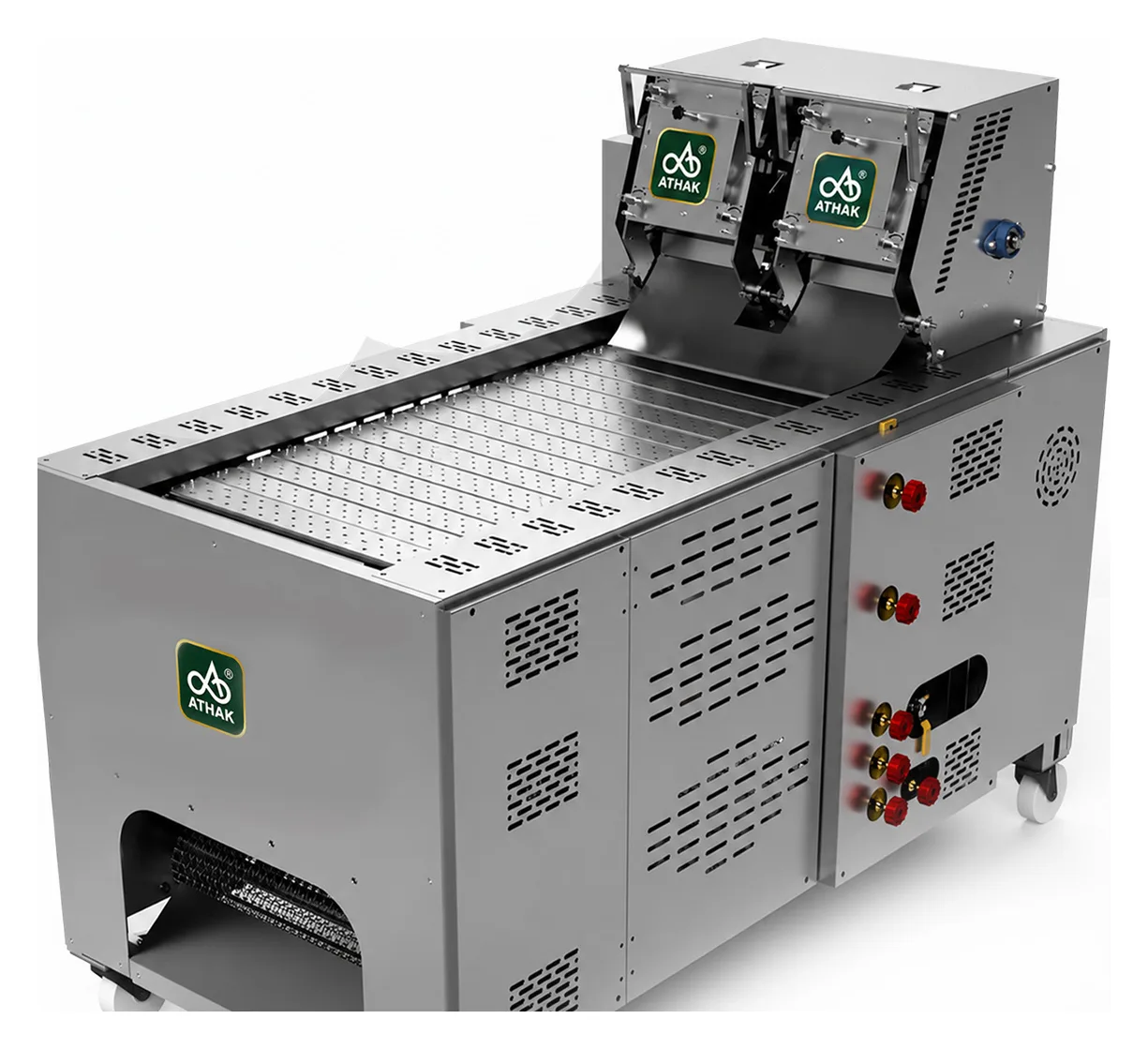
Automatic Roti Making Machine (Pressing + Roasting) – PRO Series
Automatic roti machine pressing and roasting in one pass, in four PRO models rated 500, 700, 1000 and 2000 roti per hour.
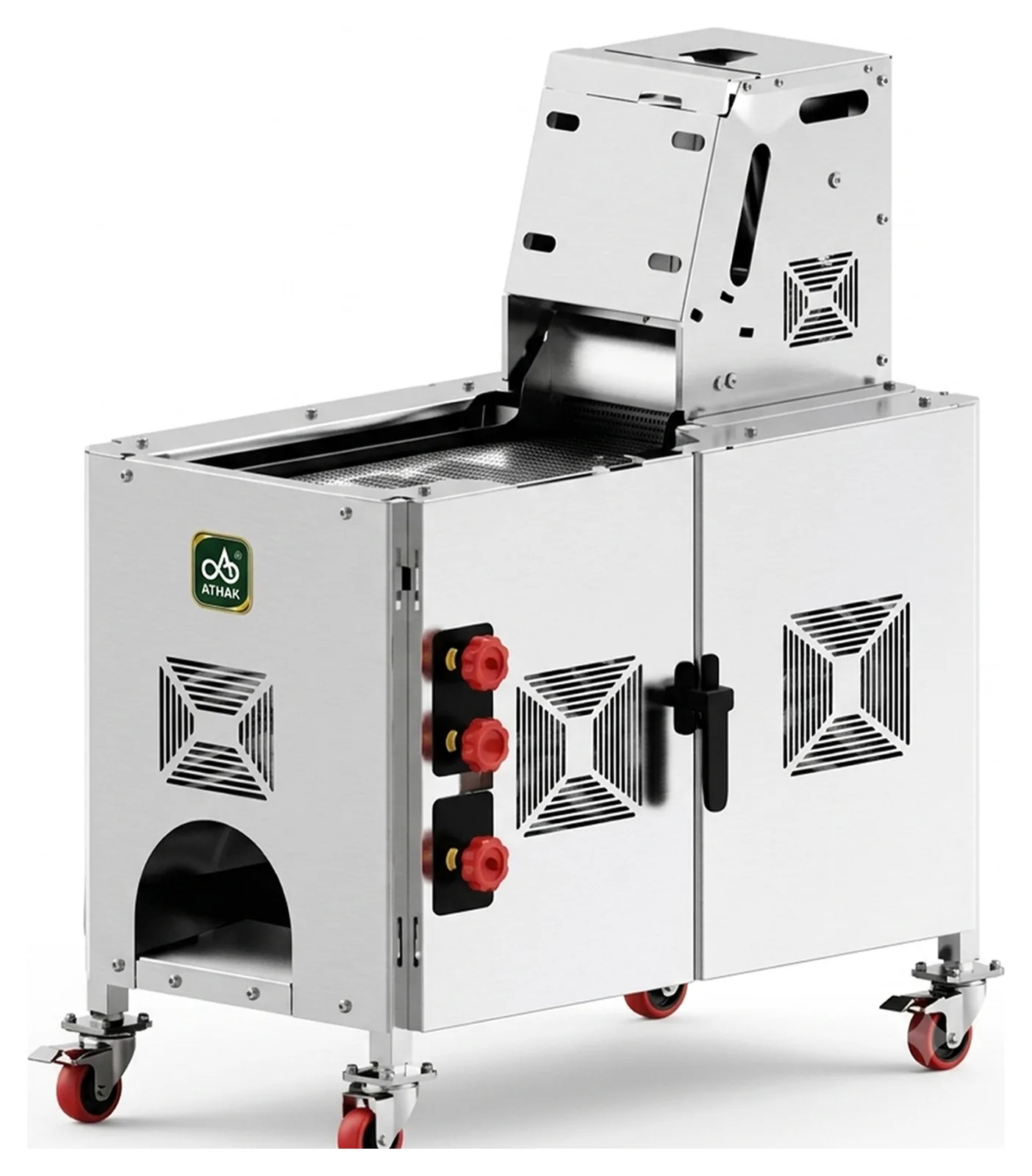
Automatic Roti Making Machine (Pressing + Roasting) – Eco Series
Eco series automatic roti machine pressing and roasting in one pass, in four models rated 300 to 1000 roti per hour.
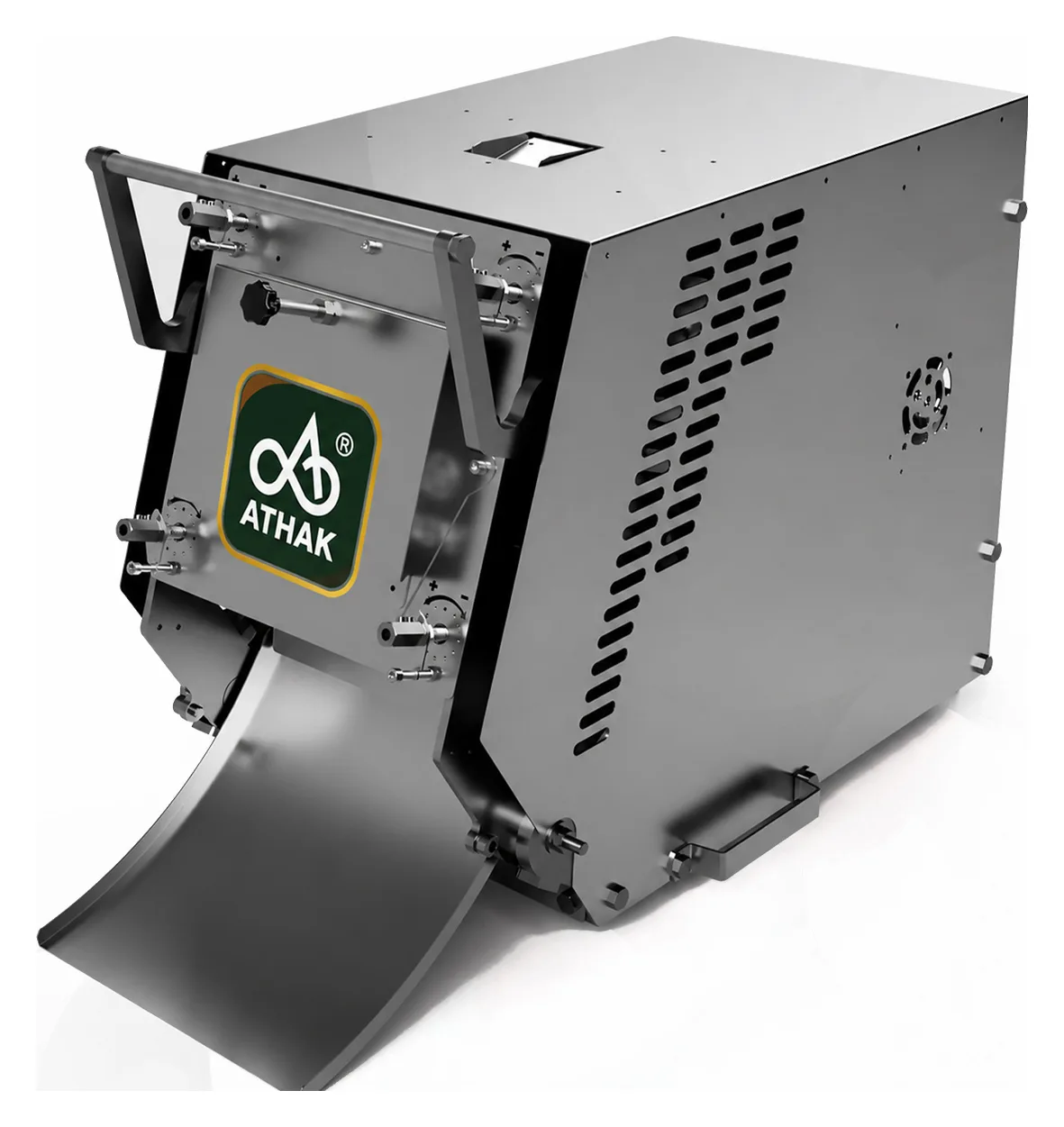
Automatic Press Machine CP-1000 Pro
Automatic roti press rated 1000 ROTI per hour, with a 14mm*10inch ceramic coated plate and 120W impulse motor.
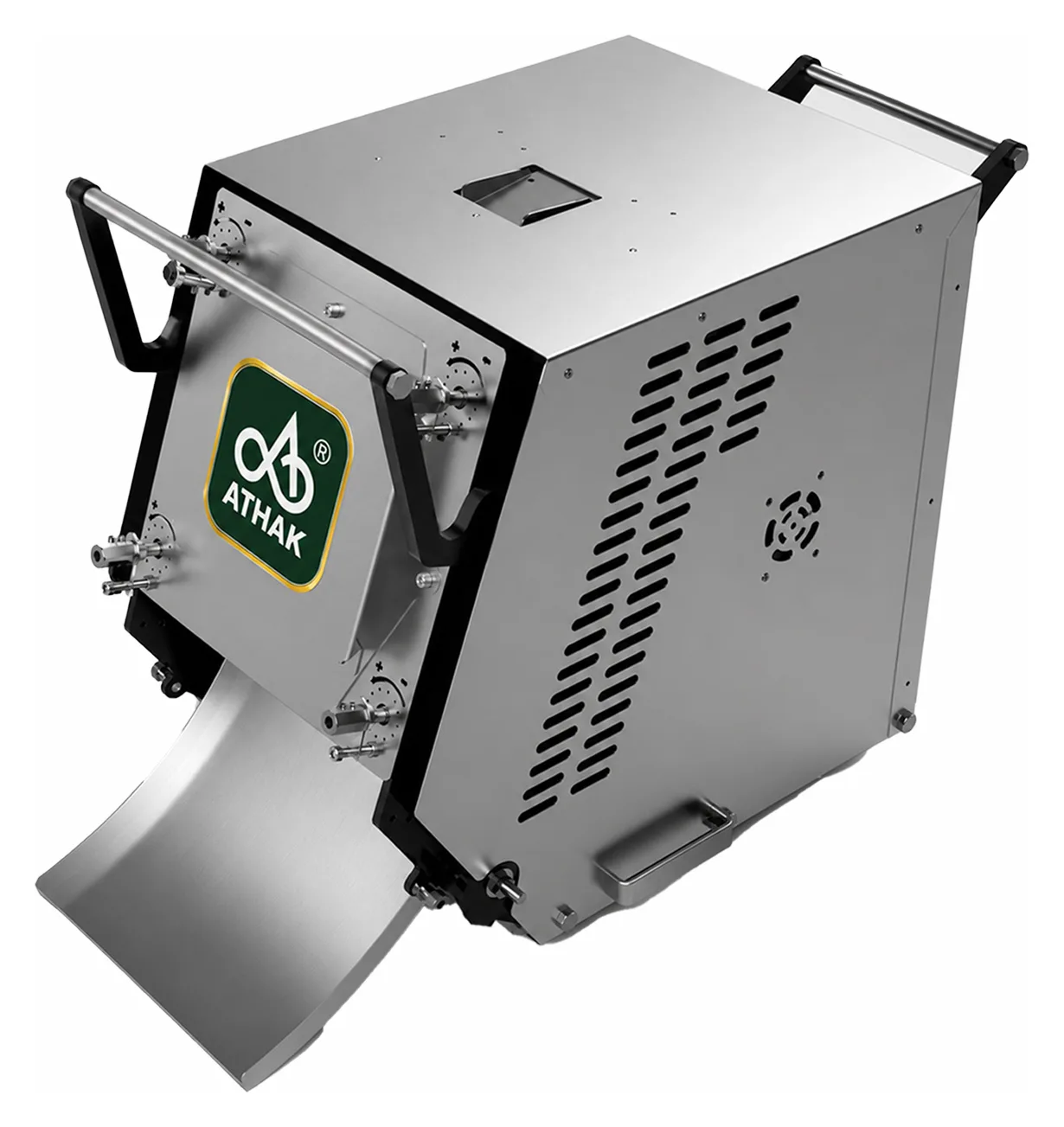
Hand Press Machine
Hand-operated roti press rated 500 ROTI per hour, with a 12mm*10inch ceramic coated plate and heavy duty pressing frame.
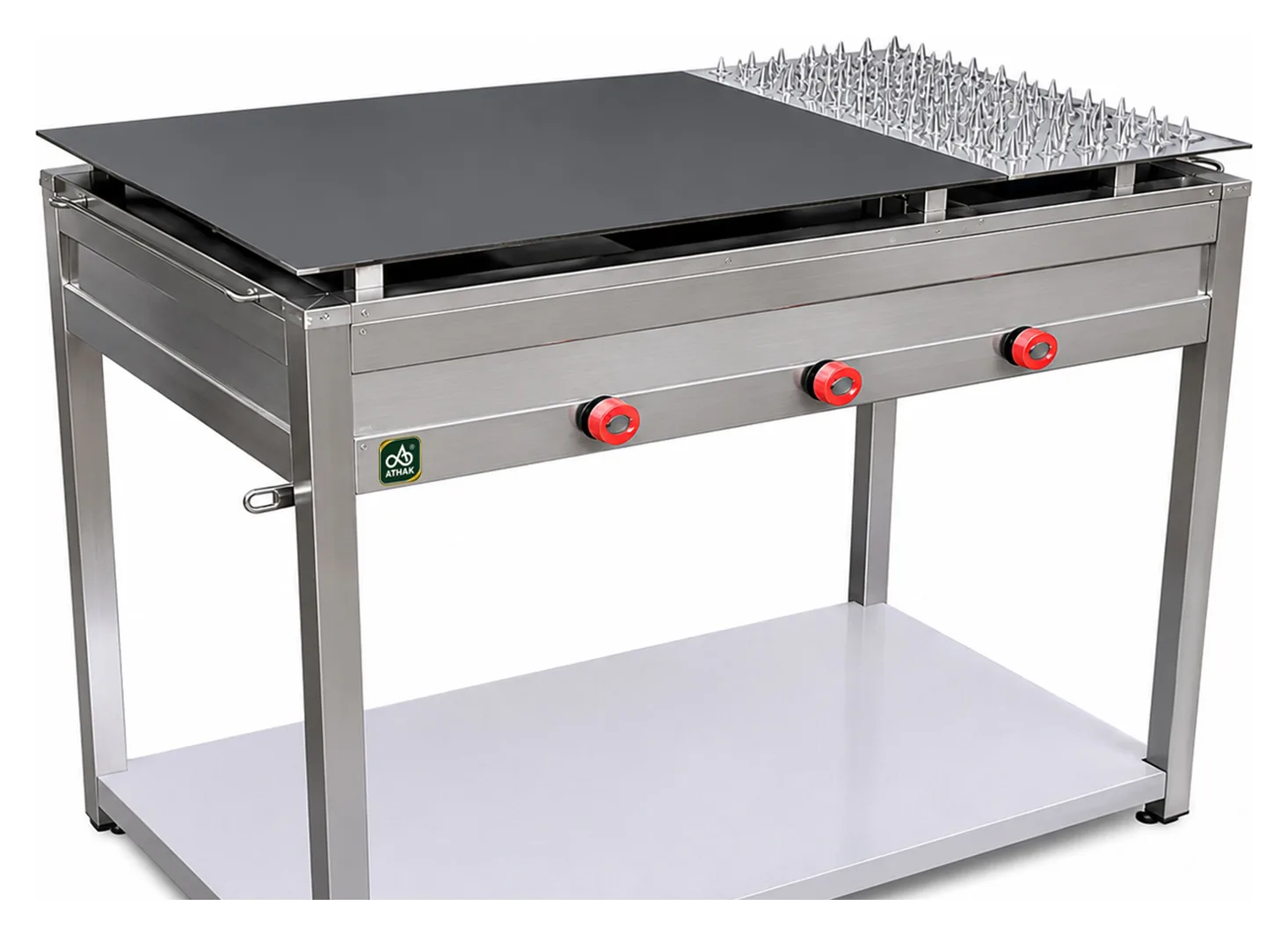
Chapati Bhatti
Heavy top-plate gas bhatti for roasting chapati at speed, in four models from 18*36*12 to 24*48*32.
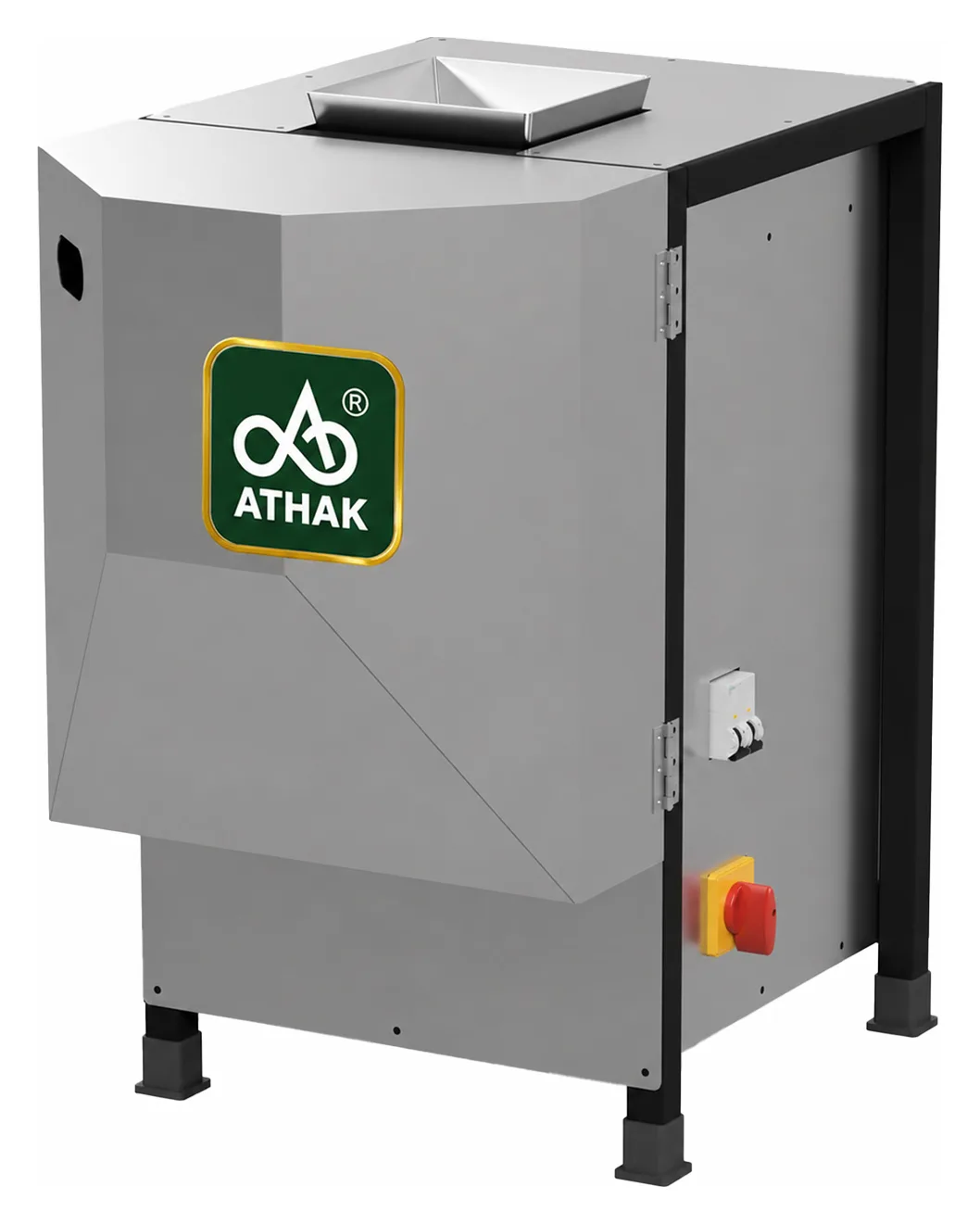
Dough Ball Cutting Machine (Electric)
Electric dough ball cutter portioning 1000-2500 pieces per hour at 20g to 50g ball size, on a 0.5 HP motor.
Browse the Family
Related Machine Categories
Ready to Talk Through Your Requirement?
Share what you need to produce and how much, and ATHAK will confirm the right machine and model.