
Buyer's Guide
How to Select a Dough Kneader
How to choose between ATHAK's SS Body, MS Stand and Drum Type dough kneading machines by batch size, motor power and construction, and size a kneader against your roti line.
Published 13 August 2026
What a Kneader Needs to Do for a Roti Line
A dough kneader’s job is straightforward to state and easy to undersize: work flour and water into a consistent dough, batch after batch, without becoming the slowest stage in your roti line. ATHAK sells three distinct kneader designs, and the right one depends on your batch size, how much floor and cleaning routine you can give it, and how it needs to sit alongside the rest of your roti and dough machinery.
Three Kneader Types in ATHAK’s Range
- Flour (Dough) Kneading Machine — SS Body — a fully stainless-steel body, described in the catalogue as built for hygienic, low-maintenance operation. Six models, 2 KG to 25 KG batch size.
- Flour (Dough) Kneading Machine — MS Stand — a stainless-steel bowl carried on a mild-steel stand. Seven models, 5 KG to 50 KG batch size — the widest range of the three, and the only one reaching 50 KG.
- Drum Type Dough Kneading Machine — kneads inside an enclosed drum, which the catalogue describes as dust-free and giving uniform dough suited to roti, bhakhri and bakery lines alike. Five models, 7 KG to 50 KG batch size.
Matching Batch Size to Your Roti Volume
| Batch size | SS Body | MS Stand | Drum Type |
|---|---|---|---|
| Smallest model | 2 KG (0.25 HP) | 5 KG (0.5 HP) | 7 KG (0.75 HP) |
| Mid-range | 10-15 KG (1 HP) | 10-20 KG (1-1.5 HP) | 12-20 KG (1.5 HP) |
| Largest model | 25 KG (1.5 HP) | 50 KG (2 HP) | 50 KG (2 HP) |
If your requirement sits above 25 KG per batch, the SS Body range doesn’t reach it — you’re choosing between the MS Stand and Drum Type at that size, which comes down to the construction question below rather than capacity.
Motor Power and Batch Time Don’t Scale Together
Bigger batches need more motor power, but they also take longer to knead — throughput doesn’t rise in a straight line with batch size. On the Drum Type range, printed kneading time runs from 2-5 minutes for the 7 KG model up to 15-20 minutes for the 30 KG and 50 KG models. Taking the midpoint of each range, a 50 KG batch is roughly seven times the mass of a 7 KG batch, but takes only around five times as long to knead — so larger batches are somewhat more time-efficient per kilogram, but not proportionally faster in kilograms per hour the way the headline KG figure alone might suggest. Plan around batches per hour your kitchen can realistically run, not the batch size on its own.
Stainless vs Mild Steel: What’s Actually Different
“SS Body” and “MS Stand” describe two different things that are easy to conflate. The SS Body kneader is stainless throughout — body and bowl both — which the catalogue positions as the hygienic, low-maintenance option. The MS Stand kneader still uses a stainless-steel bowl for the food-contact surface; only the supporting stand and frame are mild steel. In practice, the surface your dough actually touches is stainless on both — the difference is in the frame, the KG range each design is built for, and how much of the machine you’re cleaning and maintaining as stainless versus painted steel.
Open Bowl or Enclosed Drum
The SS Body and MS Stand kneaders both use an open bowl — you can see the dough forming and adjust by eye as it kneads. The Drum Type kneader works inside an enclosed housing instead, which the catalogue describes as giving dust-free, uniform dough — useful where flour dust in the air is a genuine housekeeping concern, such as a kitchen running large or frequent batches. The trade-off is visibility: an enclosed drum makes it harder to check the dough mid-cycle without opening the machine. If your operators are used to judging dough by eye and adjusting as they go, an open-bowl kneader keeps that workflow intact; if minimising airborne flour is the priority, the enclosed drum is built for that specifically.
Sizing the Kneader to the Rest of Your Line
It’s straightforward to size a press or an Automatic Roti Making Machine by its roti-per-hour rating and then discover the kneader feeding it can’t turn over batches fast enough to keep up. Work out how many kneading batches per hour your chosen model can realistically deliver — batch size ÷ cycle time — before committing to a press or automatic line rated well above that. The Dough Ball Cutting Machine (Electric), which portions kneaded dough at 1000-2500 pieces per hour, is rarely the constraint; the kneader upstream of it usually is. How much roti production capacity does a commercial kitchen need? works through matching capacity across every stage of the line, not just the press.
Questions to Ask Before You Choose
- What’s your flour volume per batch, and how many batches do you realistically need per shift?
- Does your kitchen prioritise a fully stainless build, or is a mild-steel stand with a stainless bowl acceptable?
- How much floor space and bench height does the kneader need to fit?
- Have you checked the kneader’s realistic batches-per-hour against the roti-per-hour rating of the press or automatic machine it feeds?
Share your batch size and daily volume when you request a quote, and ATHAK will confirm which kneader design and model actually keeps pace with the rest of your line.
Related Machinery
Machines Covered in This Guide
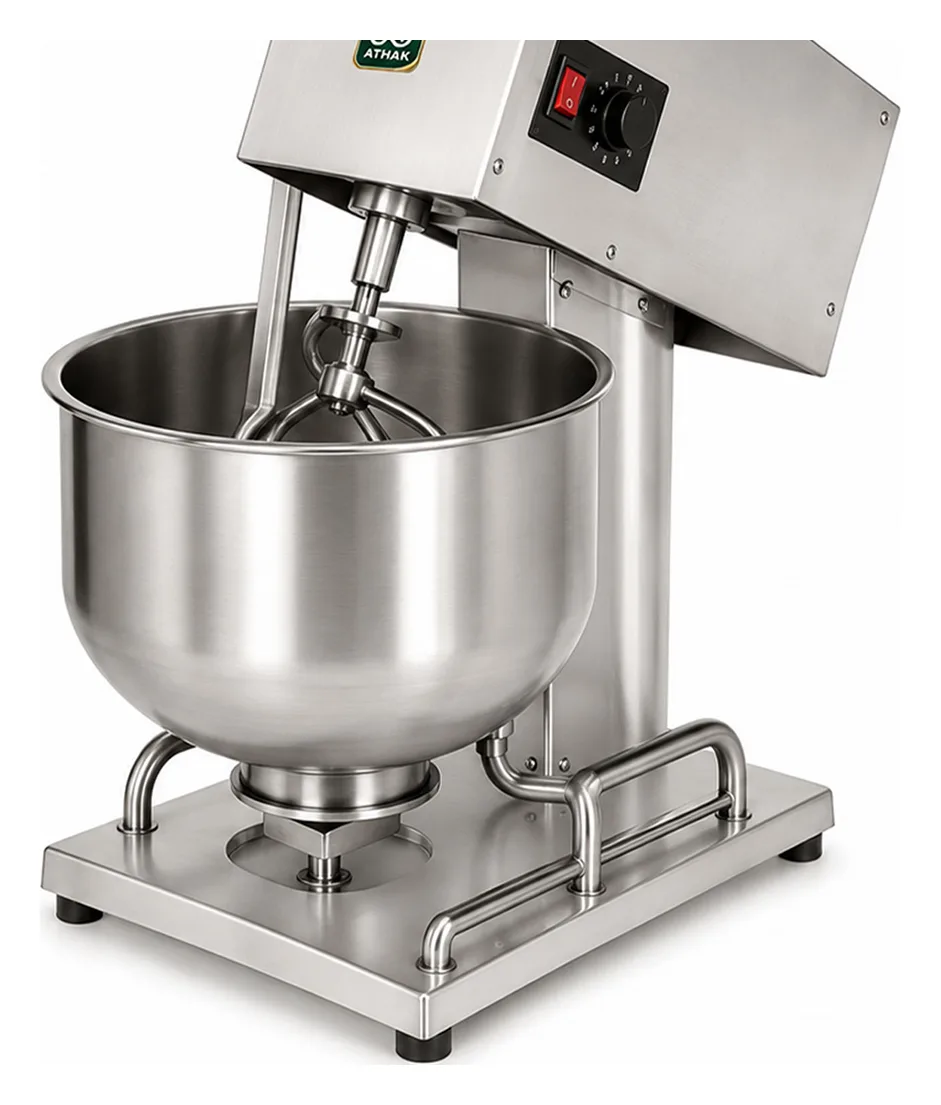
Flour (Dough) Kneading Machine – SS Body
Full stainless steel body atta kneader in six models from 2 KG to 25 KG, for hygienic, low-maintenance operation.
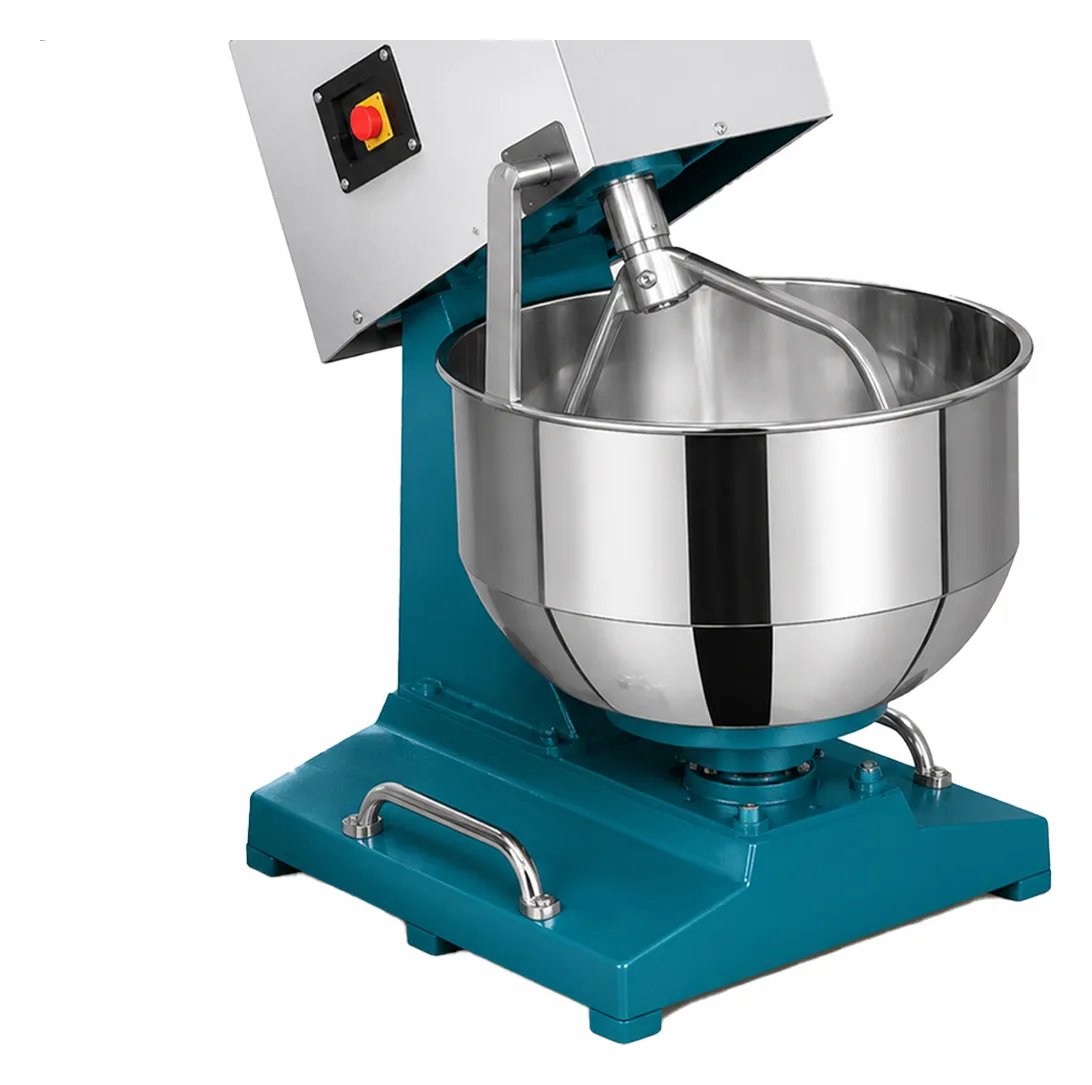
Flour (Dough) Kneading Machine – MS Stand
Commercial atta kneader on a mild-steel stand with SS bowl, in seven models from 5 KG to 50 KG batch size.
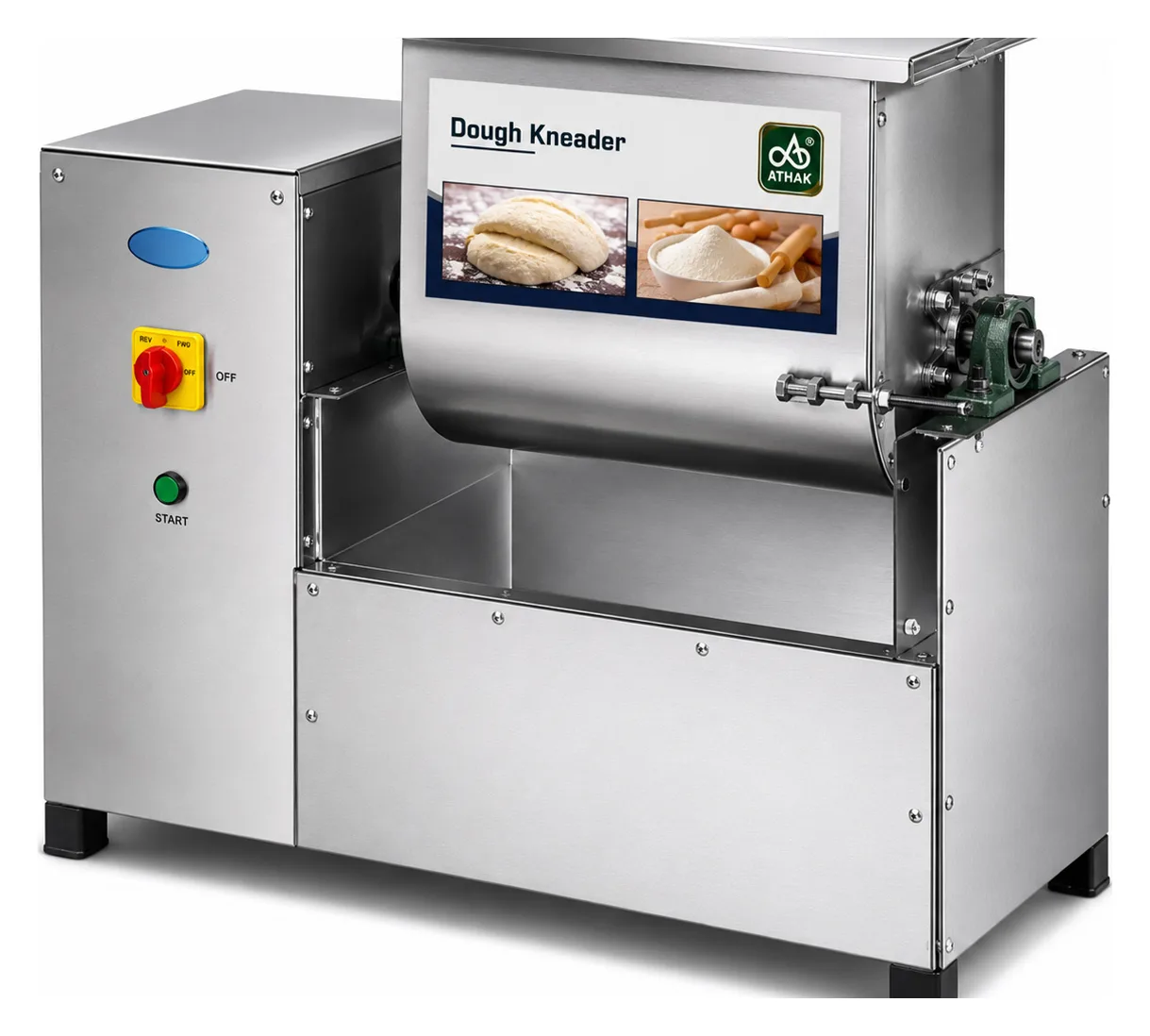
Drum Type Dough Kneading Machine
Enclosed drum kneader for dust-free, uniform dough, in five models from 7 KG to 50 KG batch size.
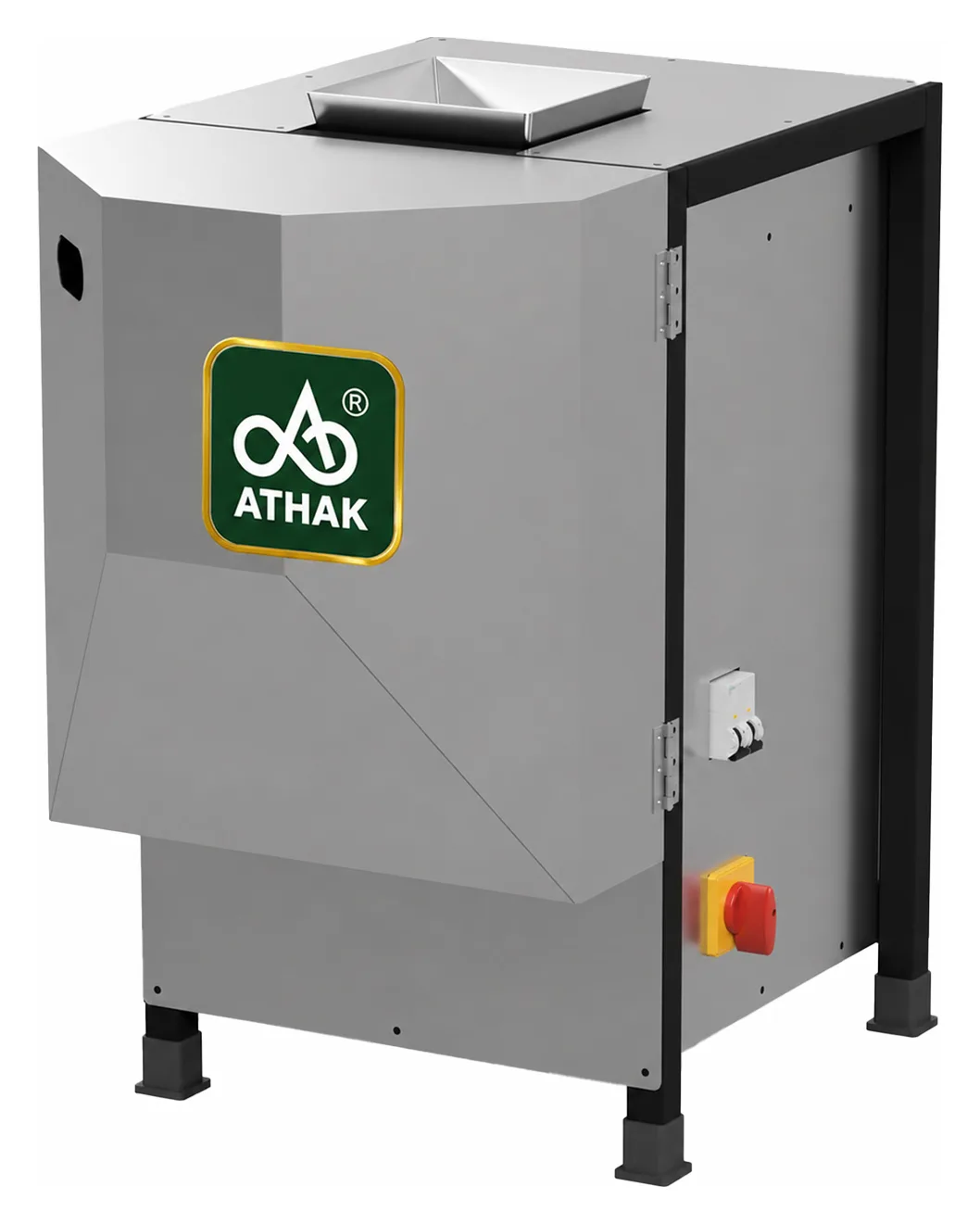
Dough Ball Cutting Machine (Electric)
Electric dough ball cutter portioning 1000-2500 pieces per hour at 20g to 50g ball size, on a 0.5 HP motor.
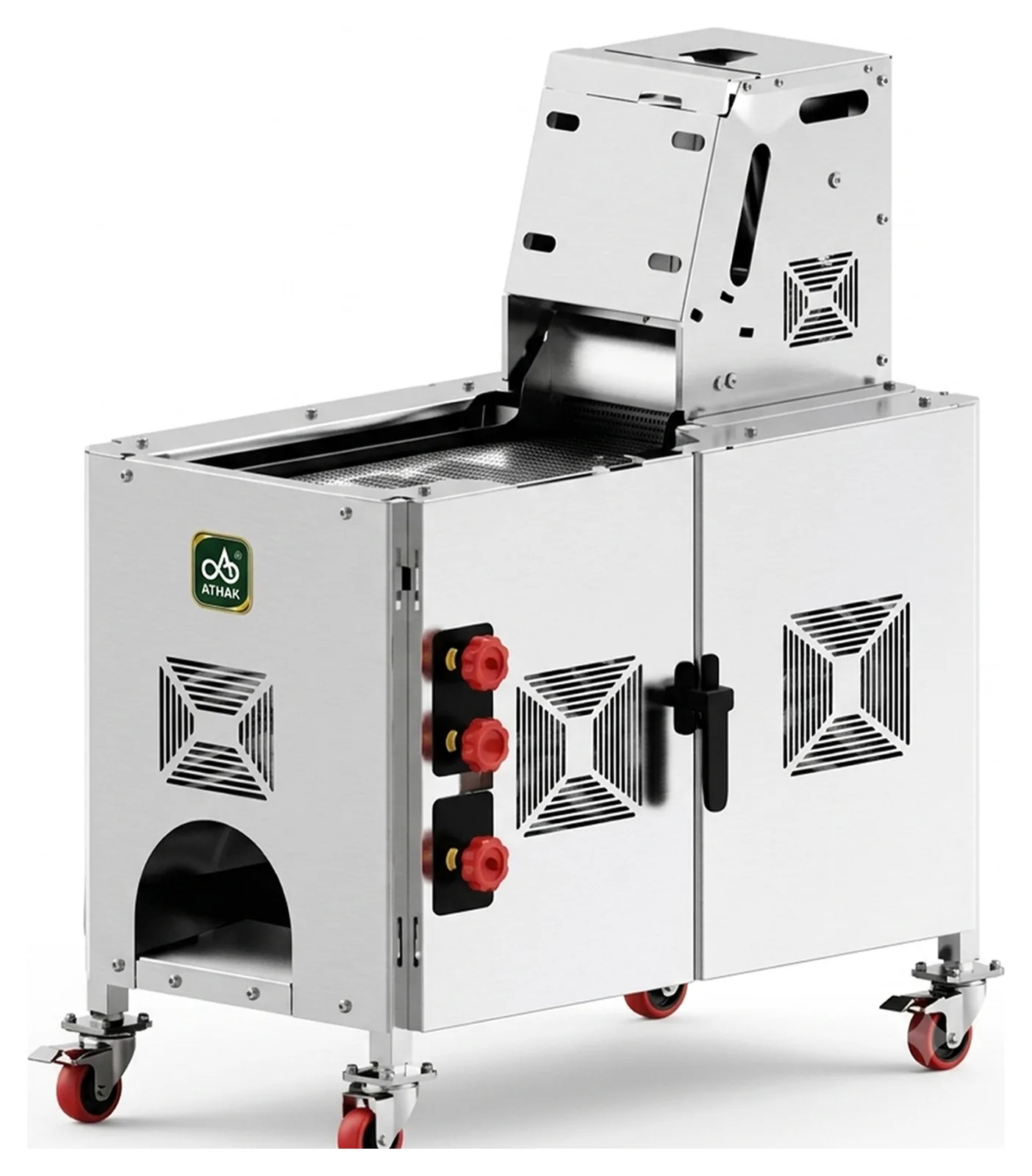
Automatic Roti Making Machine (Pressing + Roasting) – Eco Series
Eco series automatic roti machine pressing and roasting in one pass, in four models rated 300 to 1000 roti per hour.
Browse the Family
Related Machine Categories
Ready to Talk Through Your Requirement?
Share what you need to produce and how much, and ATHAK will confirm the right machine and model.