
Buyer's Guide
Automatic vs Semi-Automatic Roti Machines
What actually separates hand-operated, automatic-pressing and fully automatic roti machines — with real capacities, motors and power draw from ATHAK's roti and dough range.
Published 13 August 2026
The Question Behind “Automatic vs Semi-Automatic”
Buyers usually mean one thing when they ask this: how much manual handling does a roti need between dough ball and finished roti? ATHAK’s catalogue doesn’t print the word “semi-automatic” on any model, but its range still spans that middle ground operationally — some machines automate one step and leave the next to you, others automate both. Working through what’s actually printed, model by model, is more useful than the label alone.
Fully Manual: The Hand Press Machine
The Hand Press Machine is a lever-operated press — no motor is listed for the pressing action. It’s rated at 500 roti per hour, with a 12mm × 10 inch ceramic-coated plate and a heavy-duty 10mm-sheet pressing frame. It runs on a 230V, 2200W supply even though there’s no motor driving the press itself — that power figure is printed against the machine as a whole, not broken out by function. Roasting is a separate step on whatever bhatti or tawa setup you already run.
Automatic Pressing, Manual Roasting
Two ATHAK products automate the pressing step but stop there, leaving roasting as a separate manual stage:
- Automatic Press Machine CP-1000 Pro — a 120W impulse motor with speed control, rated 1000 roti per hour, on a 230V single-phase (3200W) supply.
- Automatic Roti Pressing Machine — Eco Series — two smaller models, CP 300 Eco (25W impulse motor, 300 roti/hour, 230V 1800W) and CP 500 Eco (40W impulse motor, 500 roti/hour, 230V 2300W). The catalogue describes this line explicitly as pressing “ahead of a separate bhatti or tawa for roasting.”
This is the tier most people mean by “semi-automatic” in practice: the repetitive, hand-fatiguing part — pressing — is motorised, but an operator still moves each round to a roasting surface such as ATHAK’s Chapati Bhatti. It suits a kitchen that already has a working roasting setup and wants to add throughput and consistency at the pressing stage without replacing what already works.
Fully Automatic: Pressing and Roasting in One Pass
The Automatic Roti Making Machine — Eco Series and PRO Series carry each dough ball across an SS304 three-layer conveyor through pressing and roasting with no manual transfer at all. The Eco Series spans four models from 300 to 1000 roti/hour; the PRO Series spans four models from 500 to 2000 roti/hour, with the largest, the S 2000 Pro, running on a 415V three-phase supply. This is the tier with the fewest manual touches per roti — and correspondingly, the largest single machine and the highest equipment cost for that one purchase.
Comparing the Tiers Directly
| Tier | Example model(s) | Rated capacity | What’s automated | What’s still manual |
|---|---|---|---|---|
| Manual | Hand Press Machine | 500 roti/hour | Nothing (lever-operated) | Pressing and roasting |
| Automatic pressing only | CP-1000 Pro; Eco Series press (CP 300 / CP 500 Eco) | 300 to 1000 roti/hour | Pressing | Transfer to roasting, and roasting itself |
| Fully automatic | Automatic Roti Making Machine — Eco / PRO Series | 300 to 2000 roti/hour | Pressing and roasting | Feeding dough balls in |
Even the fully automatic tier still needs dough balls fed into it — see how to choose a commercial roti making machine for how the Dough Ball Cutting Machine (Electric) fits ahead of any of these.
Maintenance and Cleaning Go Up With Automation Too
Automation adds parts, and parts need upkeep. The Hand Press Machine has no motor to service — the plate and lever mechanism are the only moving parts, which keeps daily cleaning and long-term maintenance simple. Move up to automatic pressing, and there’s a motor and speed control to keep running. The fully automatic Eco and PRO Series add an SS304 conveyor, and on the PRO Series, SKF bearings across all four models — genuinely more to inspect and clean than a standalone press, but also fewer separate stations to clean overall, since pressing and roasting happen on one machine instead of two. Weigh this against your kitchen’s cleaning routine and available maintenance time, not only against rated capacity.
Which Tier Actually Fits Your Kitchen
A few honest trade-offs, based on what the specifications above actually show:
- Low or occasional roti volume, or a kitchen where labour is available and floor space isn’t: the Hand Press Machine, paired with an existing roasting setup, is the lowest-footprint and lowest-cost entry point.
- You already own a working bhatti or tawa and want to add pressing throughput without replacing it: the automatic-pressing-only tier (CP-1000 Pro or the Eco pressing models) upgrades one stage without touching the other.
- Consistent, high daily volume, or a goal of minimising manual handling per roti: the fully automatic Eco or PRO Series removes the transfer step entirely, at the cost of a larger single machine and, for the top PRO model, a three-phase electrical connection.
For a worked method to turn your own service volume into a target roti-per-hour figure — rather than guessing which tier you need — see how much roti production capacity does a commercial kitchen need?
Questions Worth Asking Before You Decide
- Do you already have a roasting appliance you want to keep using?
- How many separate hand-offs (dough ball → press → roasting surface → plating) are you trying to remove?
- What’s your available floor space for this stage of the kitchen?
- Single-phase or three-phase power at your site?
Share the answers when you request a quote, and ATHAK will confirm which tier and model actually fits, rather than the closest guess from a spec sheet alone.
Related Machinery
Machines Covered in This Guide
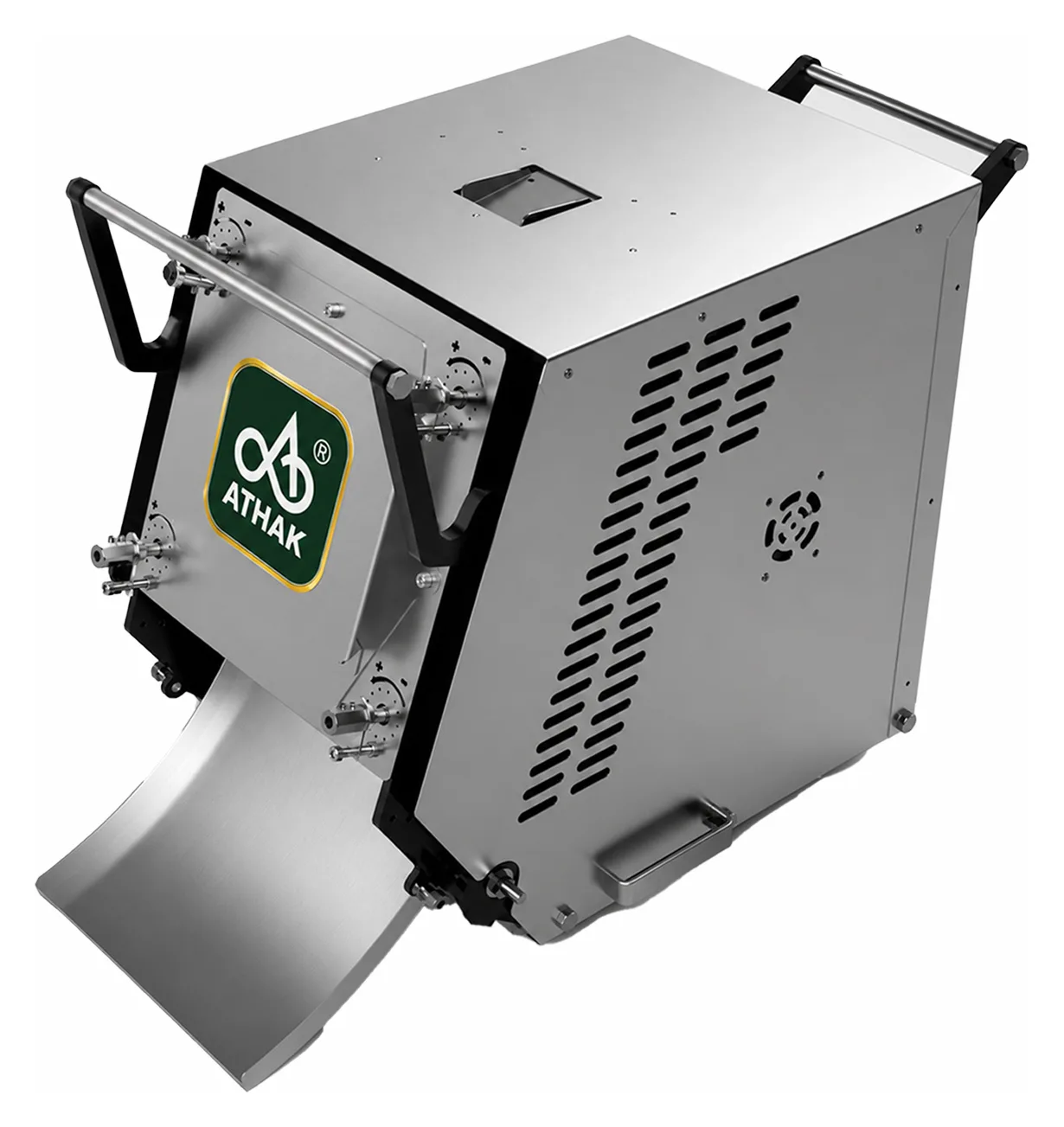
Hand Press Machine
Hand-operated roti press rated 500 ROTI per hour, with a 12mm*10inch ceramic coated plate and heavy duty pressing frame.
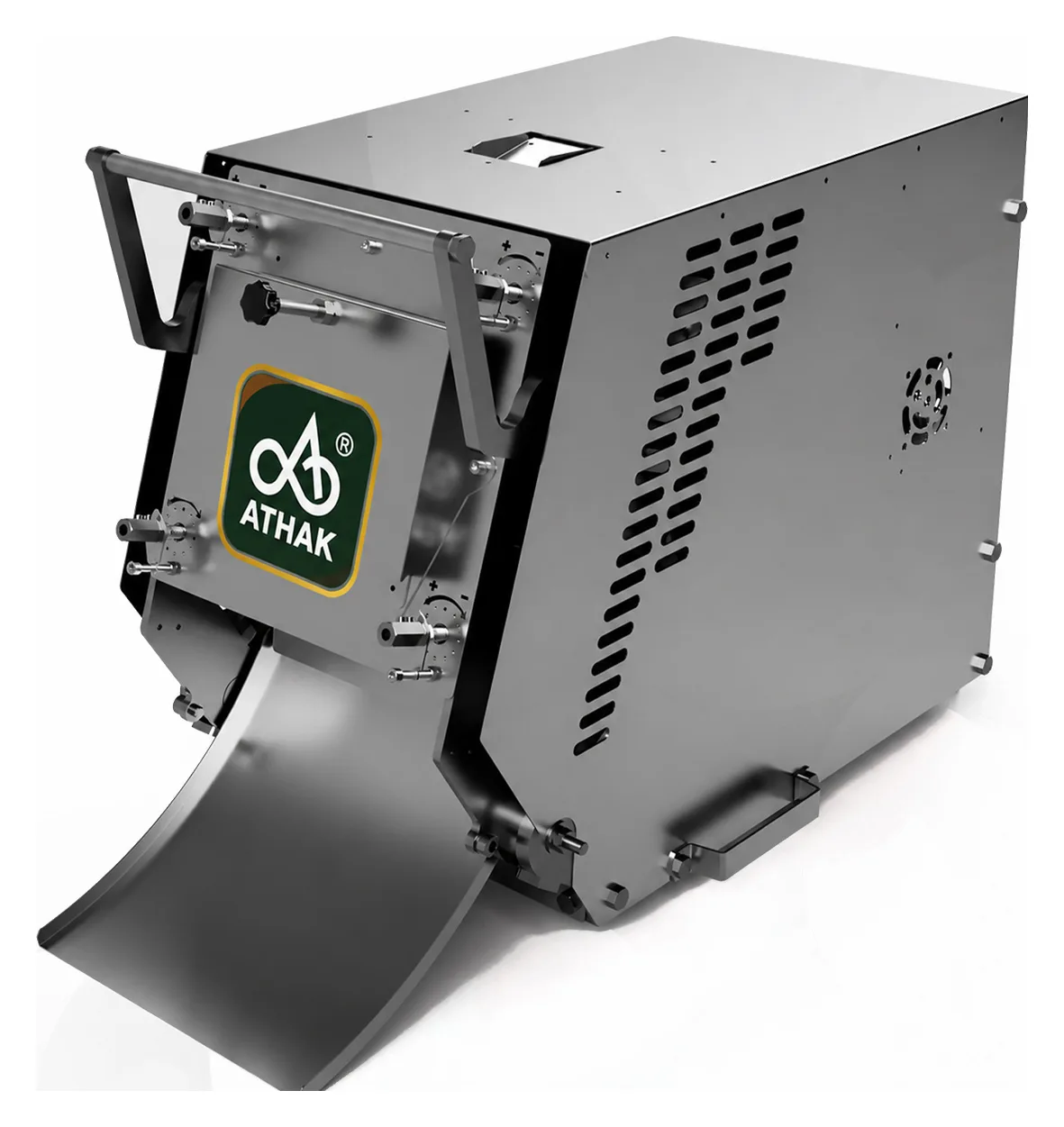
Automatic Press Machine CP-1000 Pro
Automatic roti press rated 1000 ROTI per hour, with a 14mm*10inch ceramic coated plate and 120W impulse motor.
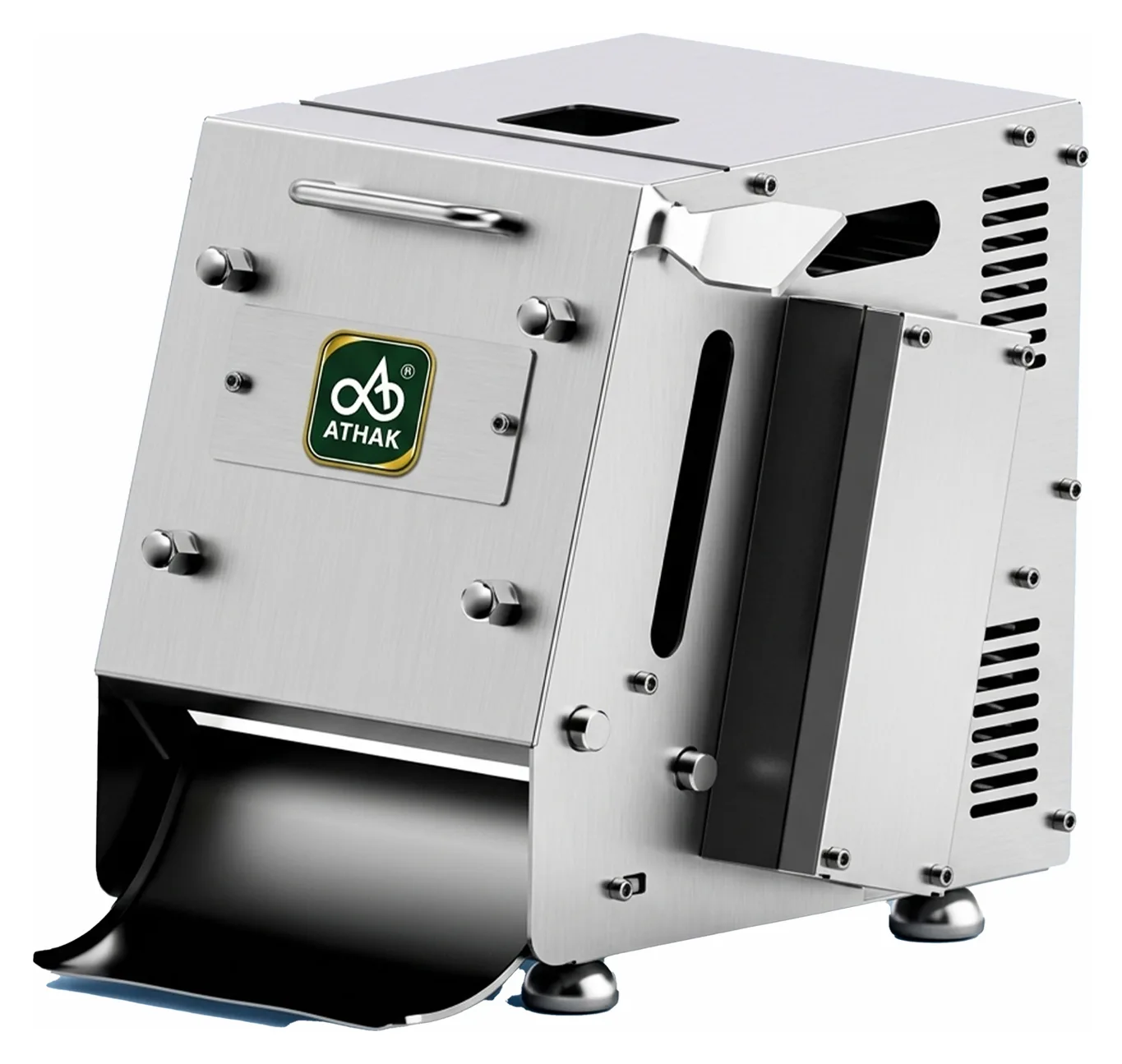
Automatic Roti Pressing Machine – Eco Series
Compact automatic roti press in two Eco models, CP 300 Eco and CP 500 Eco, rated 300 and 500 roti per hour.
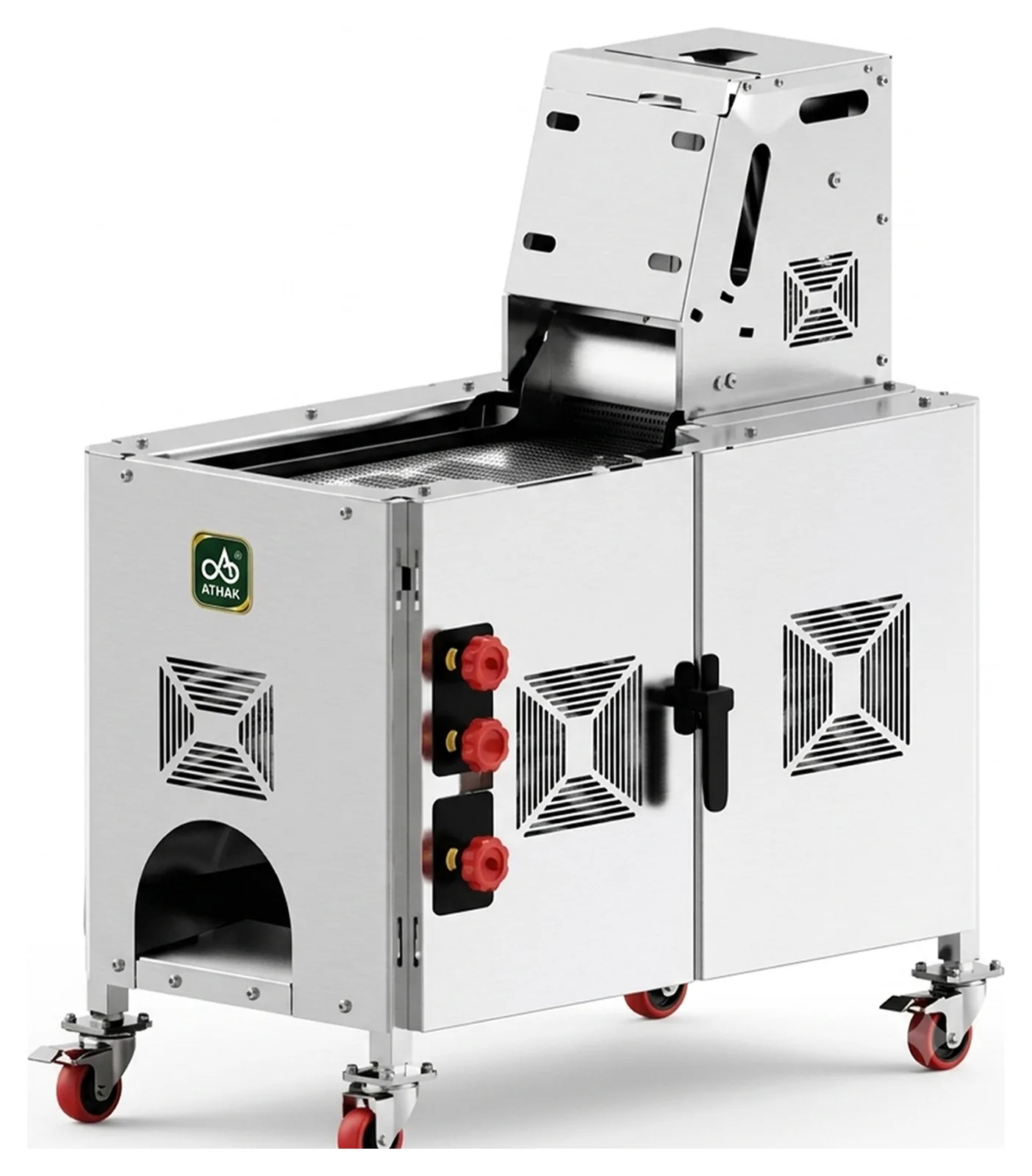
Automatic Roti Making Machine (Pressing + Roasting) – Eco Series
Eco series automatic roti machine pressing and roasting in one pass, in four models rated 300 to 1000 roti per hour.
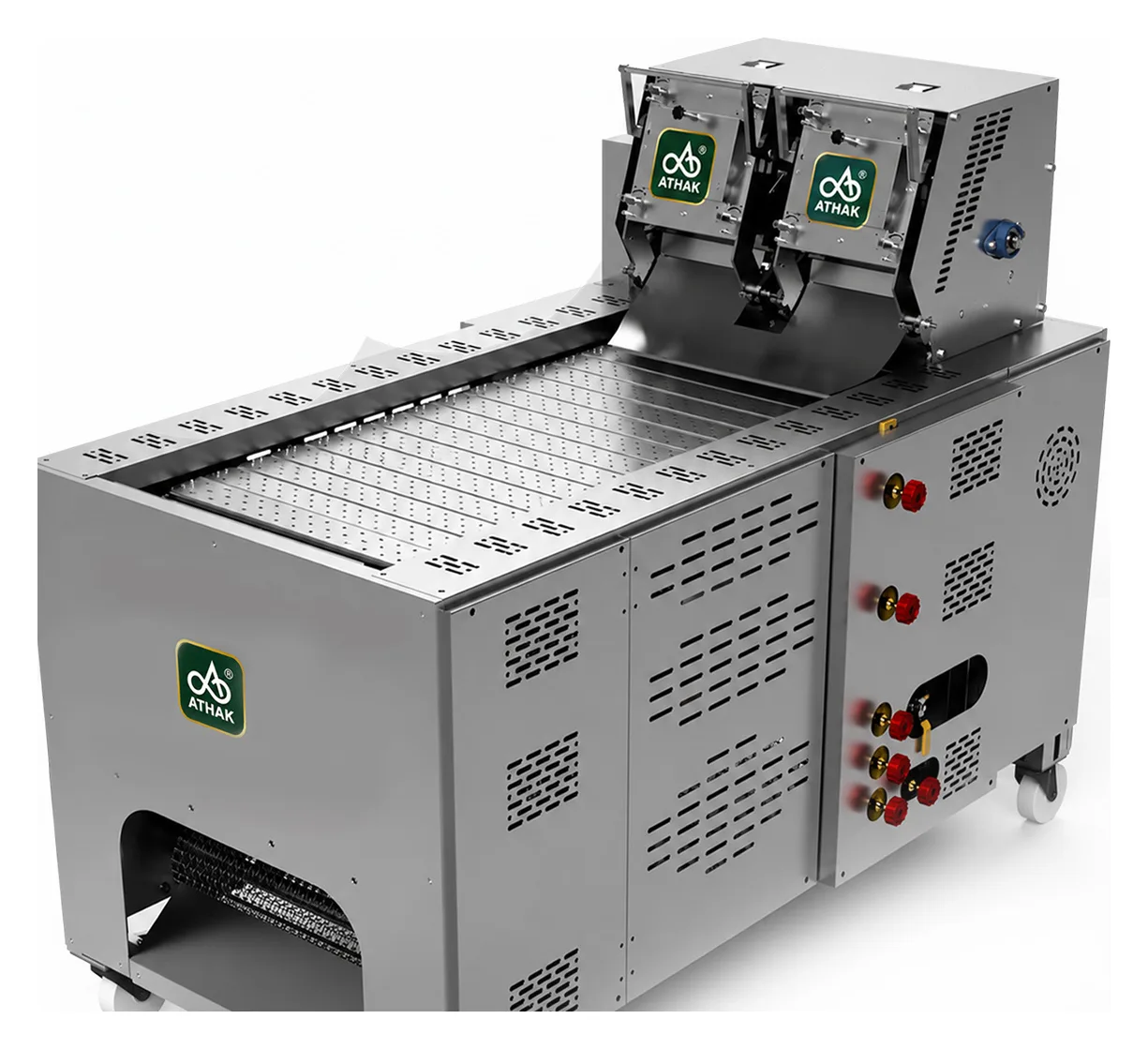
Automatic Roti Making Machine (Pressing + Roasting) – PRO Series
Automatic roti machine pressing and roasting in one pass, in four PRO models rated 500, 700, 1000 and 2000 roti per hour.
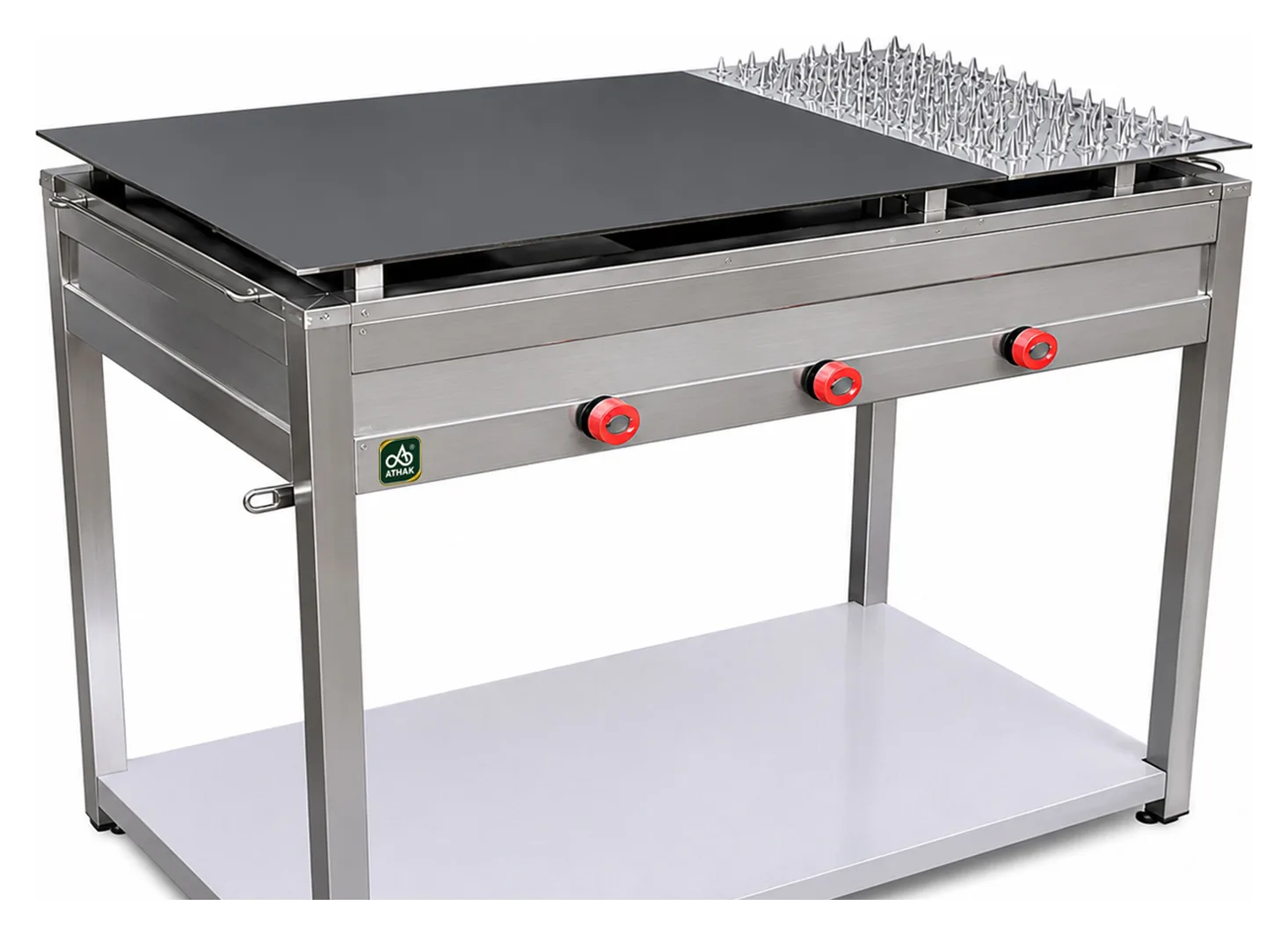
Chapati Bhatti
Heavy top-plate gas bhatti for roasting chapati at speed, in four models from 18*36*12 to 24*48*32.
Browse the Family
Related Machine Categories
Ready to Talk Through Your Requirement?
Share what you need to produce and how much, and ATHAK will confirm the right machine and model.