
Solutions · Roti Production
Roti Production, Stage by Stage
Commercial roti production runs through the same stages whether it is done on separate machines or on one combined line: dough is kneaded, portioned into balls, pressed into rounds, then roasted. ATHAK's Roti & Dough Machinery family covers every stage, plus automatic machines that combine pressing and roasting in one pass.
At a Glance
The Roti Production workflow uses ATHAK machines across 5 production stages, covering 10 machines in total.
- Best suited for
- Caterers, Hotels, Restaurants, Industrial Kitchens, Temples & Community Kitchens
- Available models
- 10 machines across 5 stages — Flour (Dough) Kneading Machine – SS Body, Flour (Dough) Kneading Machine – MS Stand, Drum Type Dough Kneading Machine, Dough Ball Cutting Machine (Electric), Hand Press Machine, CP-1000 Pro, Automatic Roti Pressing Machine – Eco Series, Chapati Bhatti, Automatic Roti Making Machine – Eco Series, Automatic Roti Making Machine – PRO Series
The Production Workflow
The 5 Stages, With Real Machines
- 1
Dough Kneading
Flour is kneaded into dough before it can be portioned or pressed. ATHAK lists two open-bowl kneaders — the MS Stand and SS Body Flour (Dough) Kneading Machines, from 2 KG to 25 KG batches — and the enclosed Drum Type Dough Kneading Machine, from 7 KG to 50 KG batches, which the catalogue describes as dust-free.
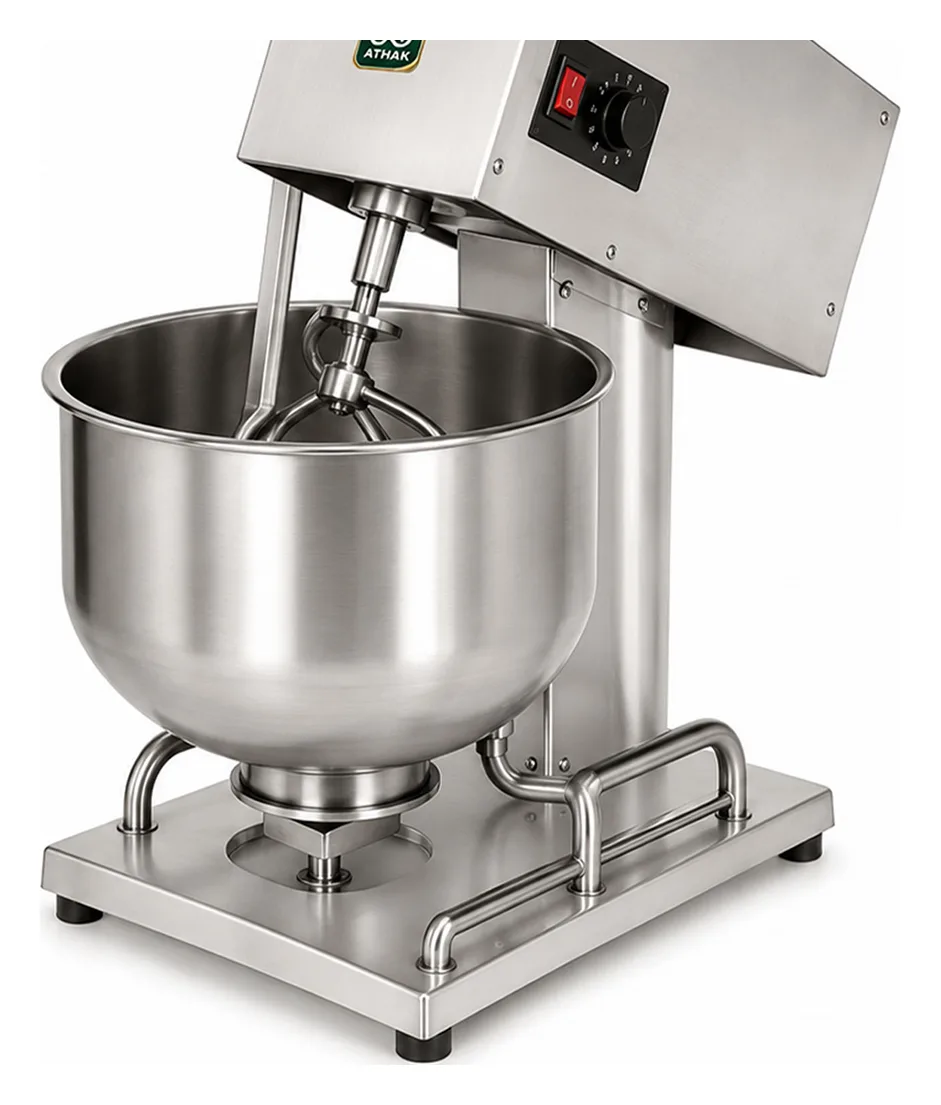
Flour (Dough) Kneading Machine – SS Body
Full stainless steel body atta kneader in six models from 2 KG to 25 KG, for hygienic, low-maintenance operation.
6 modelsView details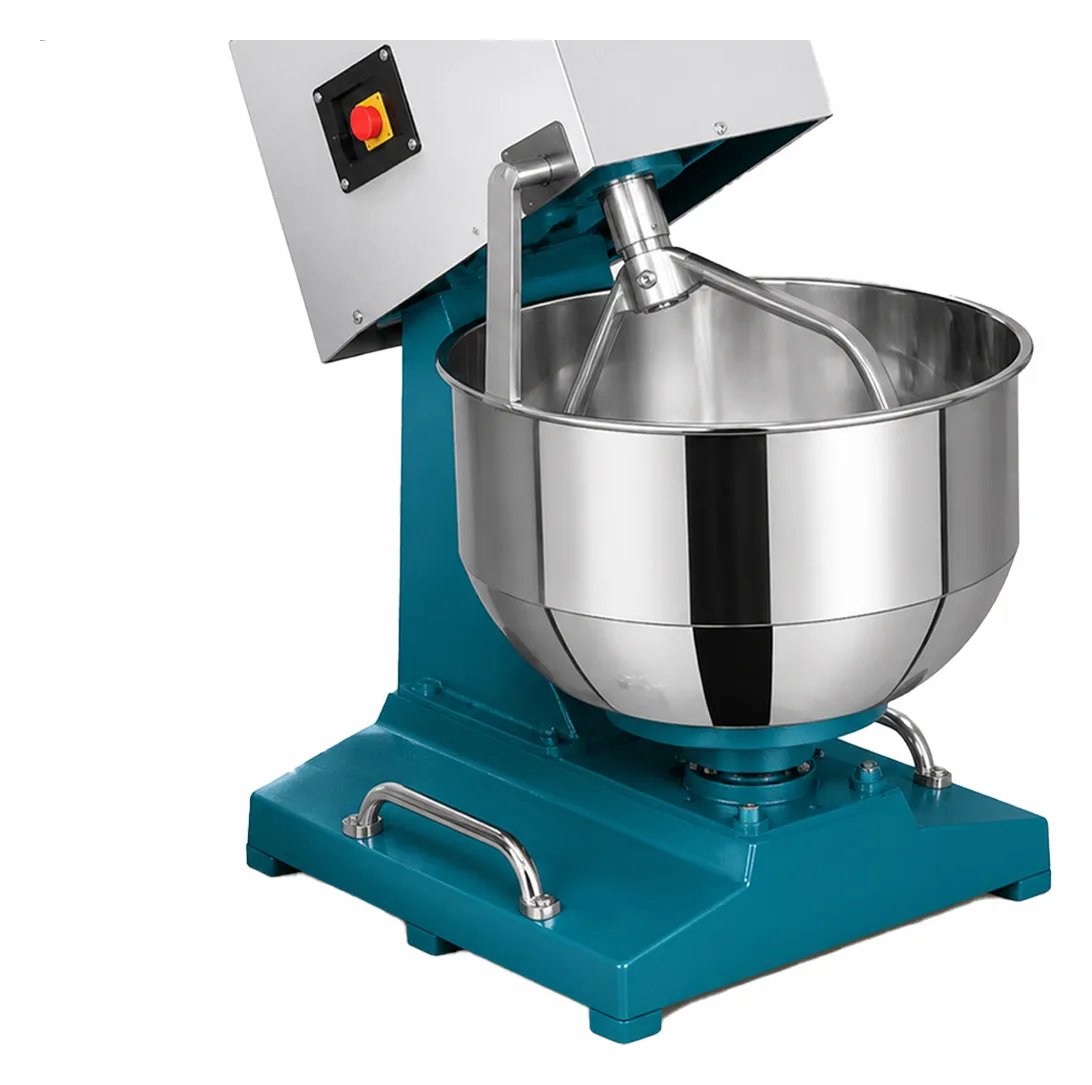
Flour (Dough) Kneading Machine – MS Stand
Commercial atta kneader on a mild-steel stand with SS bowl, in seven models from 5 KG to 50 KG batch size.
7 modelsView details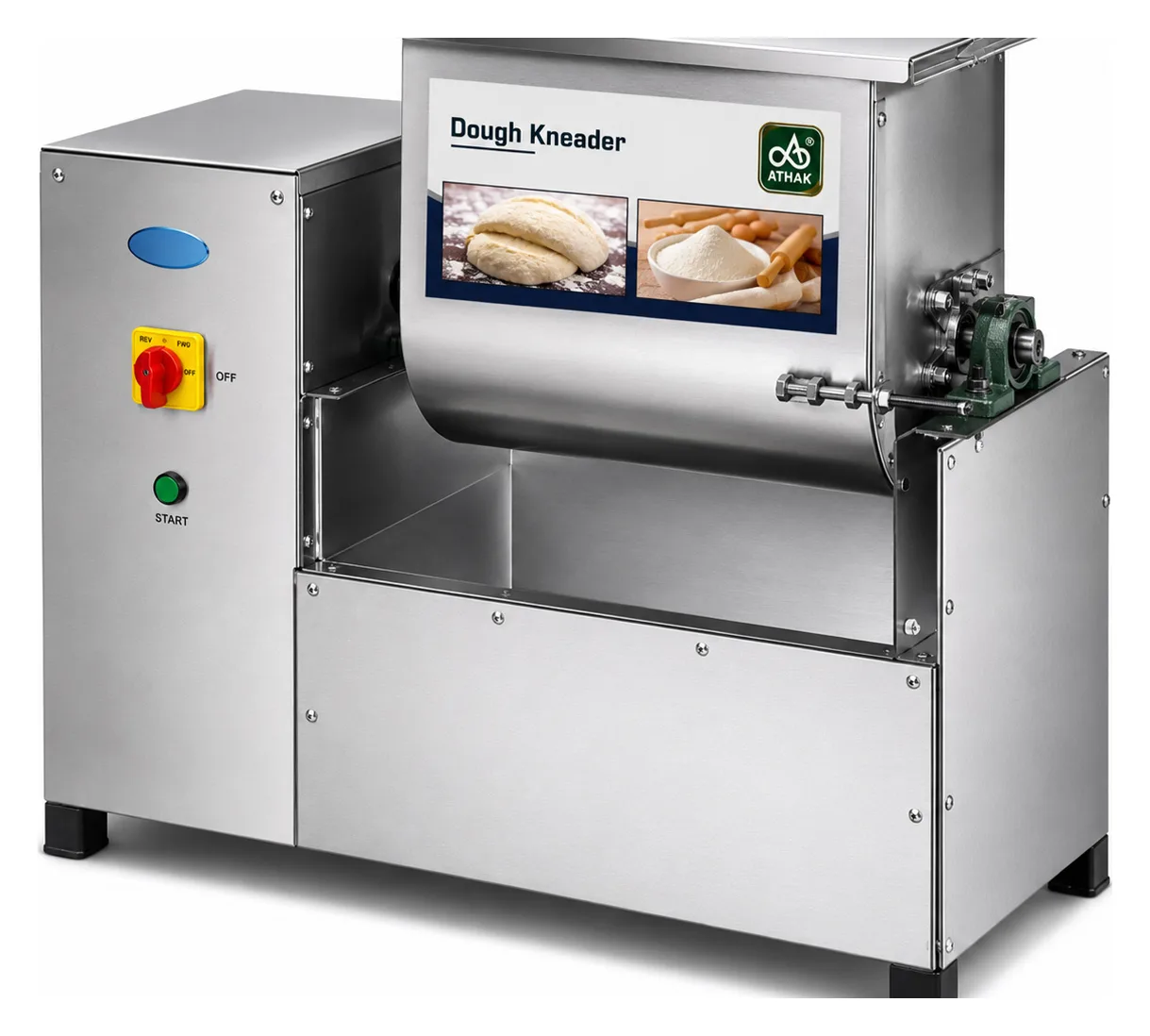
Drum Type Dough Kneading Machine
Enclosed drum kneader for dust-free, uniform dough, in five models from 7 KG to 50 KG batch size.
5 modelsView details - 2
Dough Ball Portioning
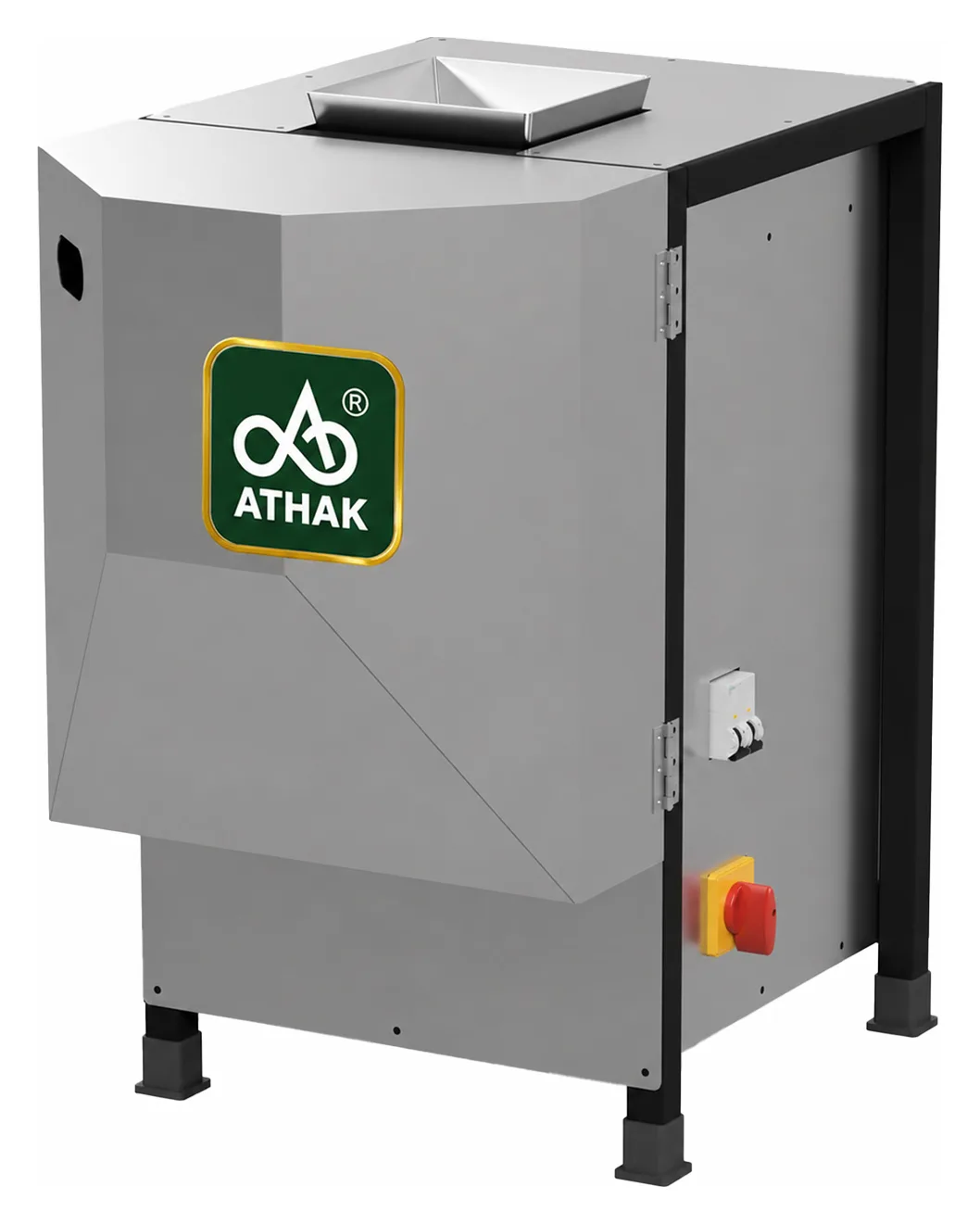
Kneaded dough is divided into equal balls before pressing. The Dough Ball Cutting Machine (Electric) portions 1000-2500 pieces per hour at a 20g to 50g ball size, replacing hand portioning.
- 3
Pressing
Dough balls are pressed into roti or chapati rounds. ATHAK lists this as a standalone stage for kitchens that roast separately: the Hand Press Machine (500 roti per hour, hand-operated), the Automatic Press Machine CP-1000 Pro (1000 roti per hour), and the Automatic Roti Pressing Machine Eco Series (CP 300 Eco and CP 500 Eco, 300 and 500 roti per hour).
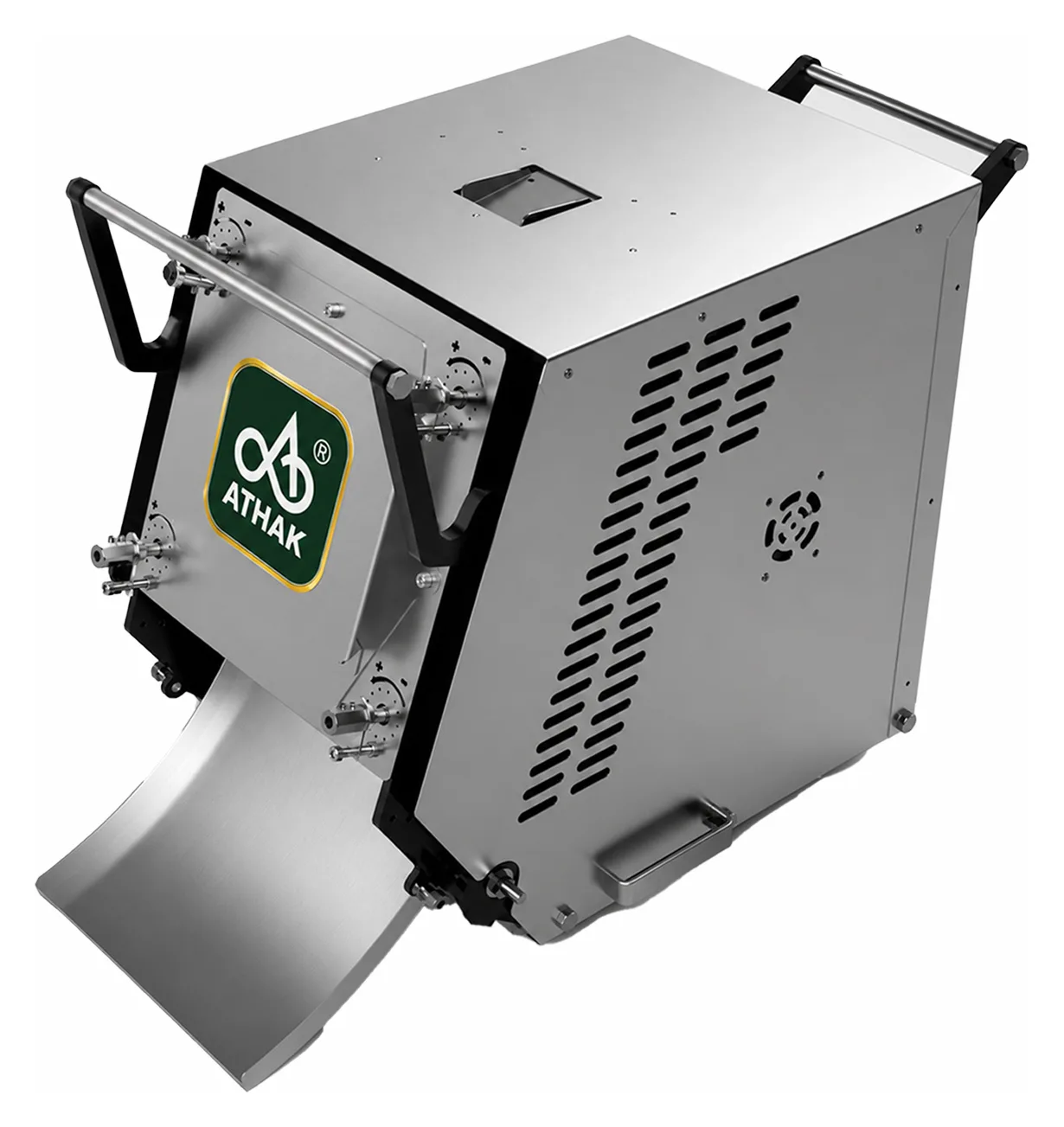
Hand Press Machine
Hand-operated roti press rated 500 ROTI per hour, with a 12mm*10inch ceramic coated plate and heavy duty pressing frame.
1 modelView details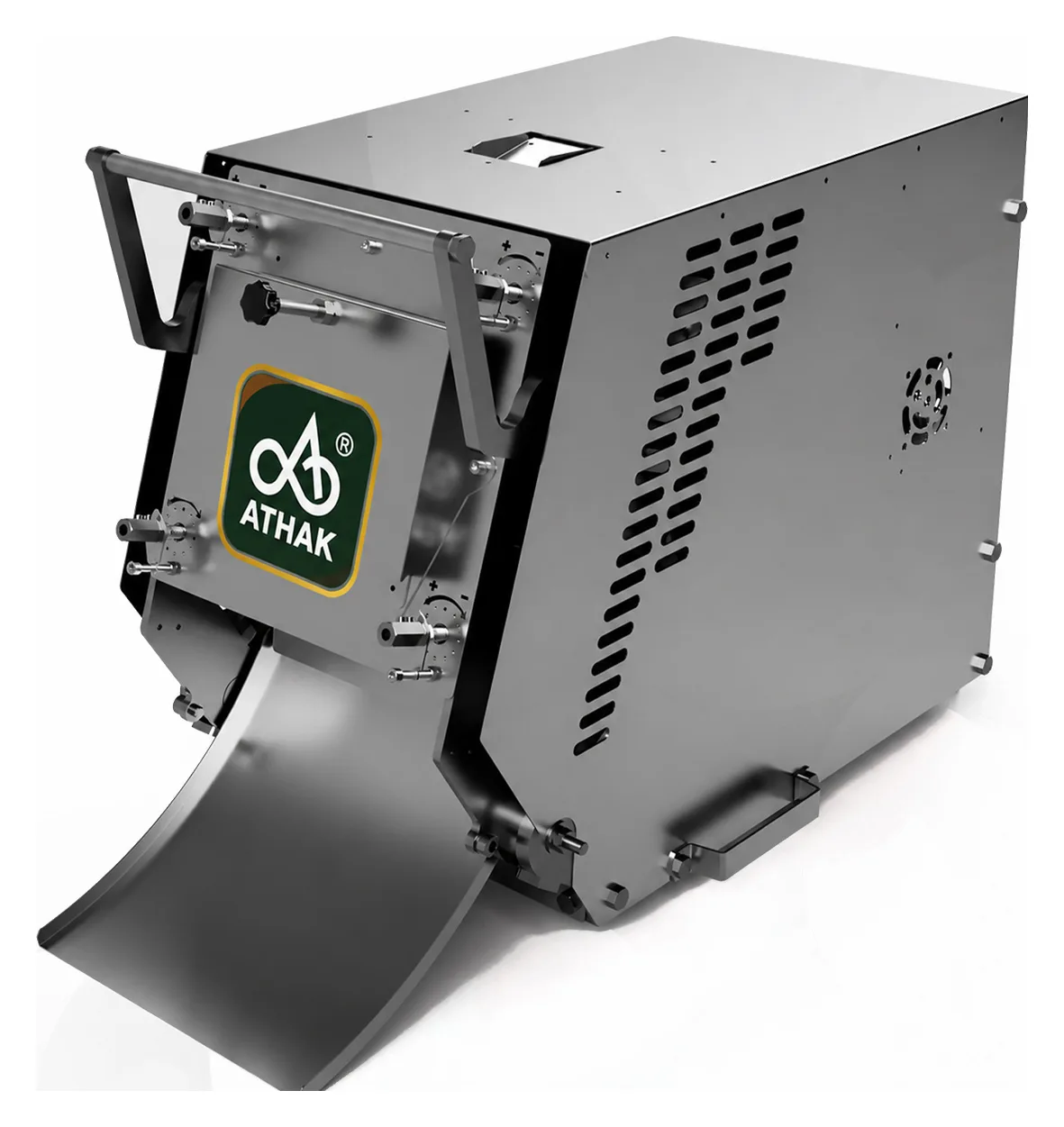
Automatic Press Machine CP-1000 Pro
Automatic roti press rated 1000 ROTI per hour, with a 14mm*10inch ceramic coated plate and 120W impulse motor.
1 modelView details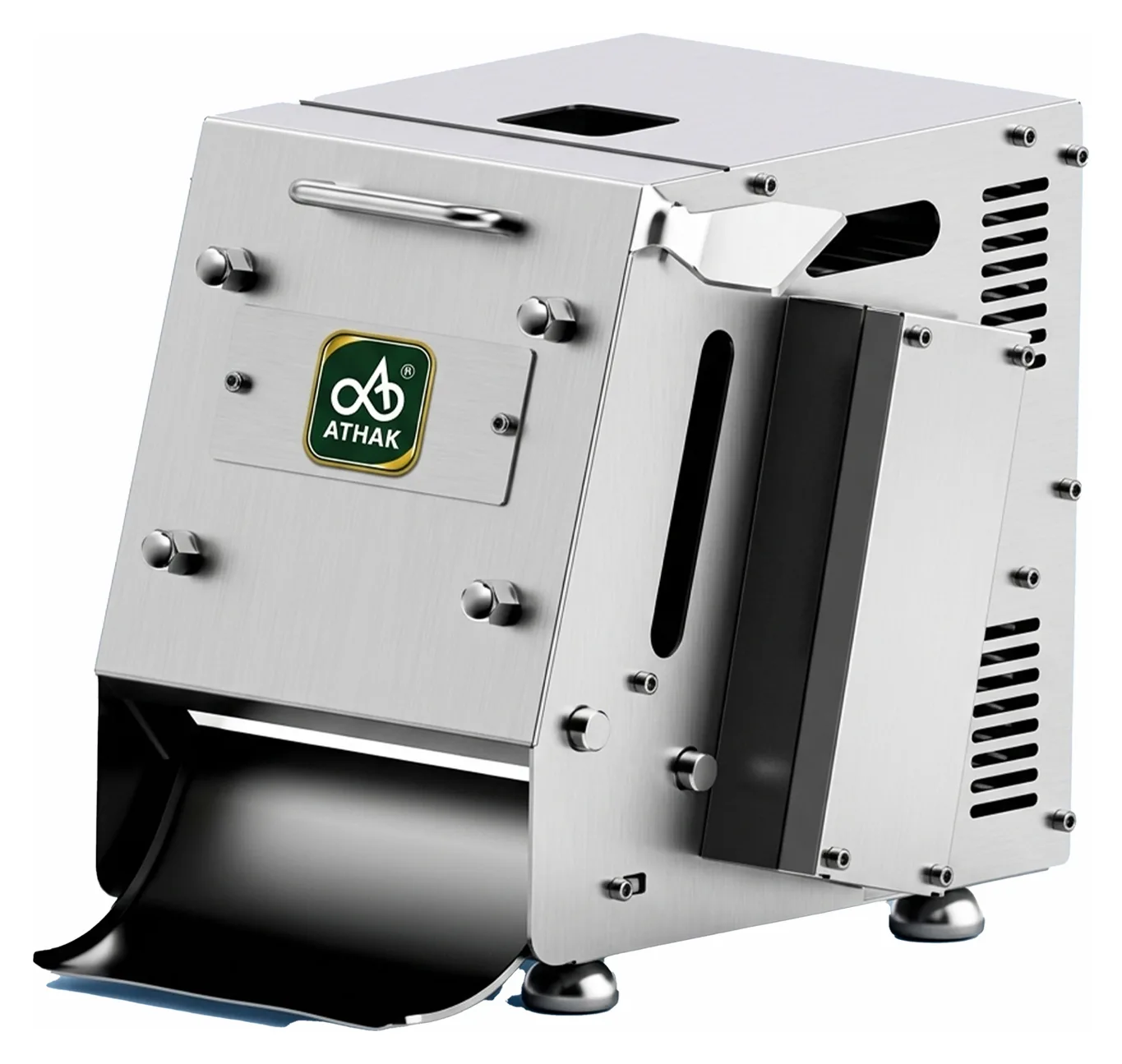
Automatic Roti Pressing Machine – Eco Series
Compact automatic roti press in two Eco models, CP 300 Eco and CP 500 Eco, rated 300 and 500 roti per hour.
2 modelsView details - 4
Roasting
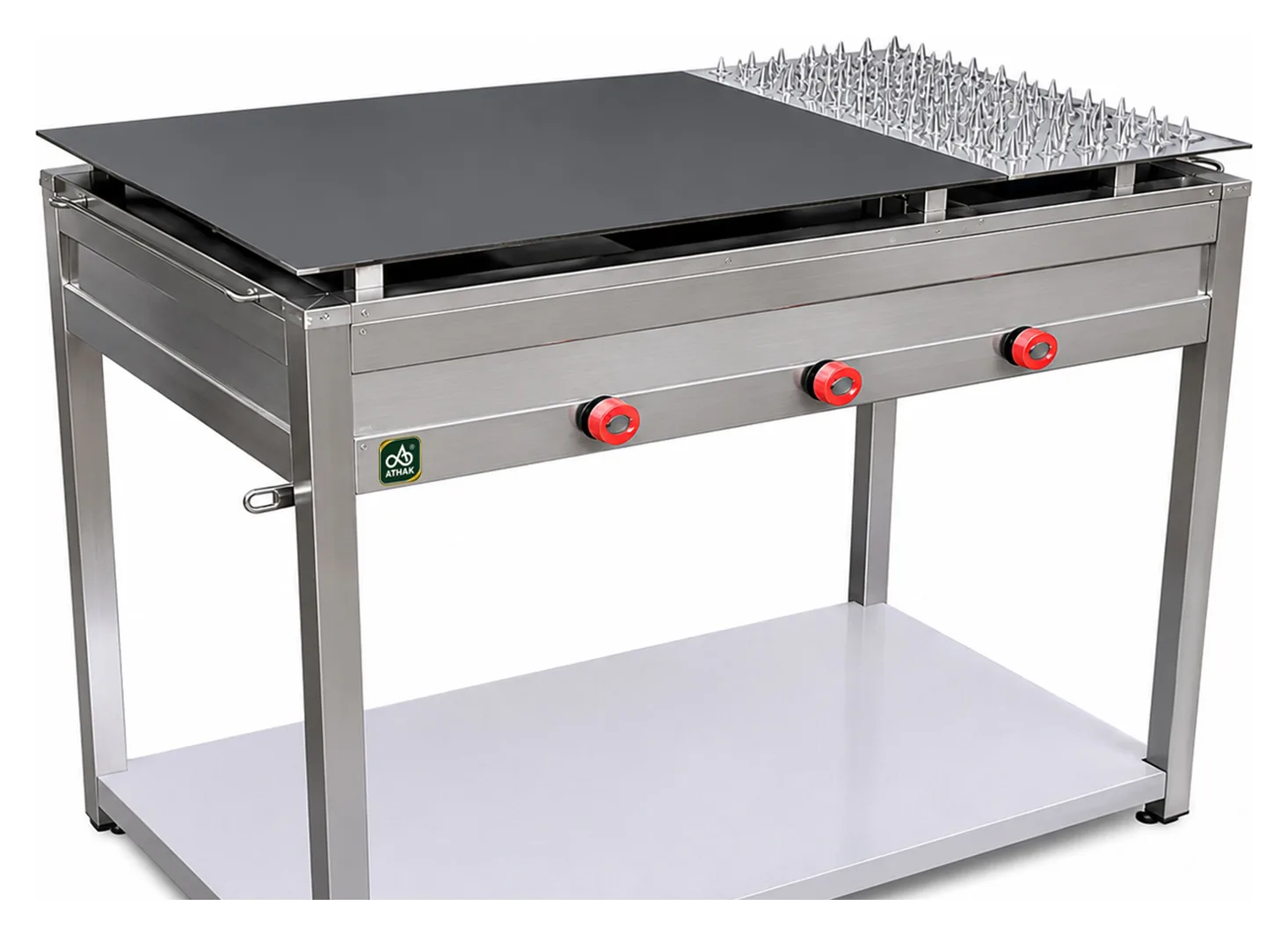
Pressed rounds are roasted to finish. The Chapati Bhatti is a heavy top-plate gas bhatti for this stage, listed in four sizes from 18*36*12 to 24*48*32.
- 5
Combined Pressing & Roasting
Rather than separate pressing and roasting machines, ATHAK's automatic roti making machines do both in one pass over a conveyor. The Eco Series runs 300 to 1000 roti per hour across four models; the PRO Series runs 500 to 2000 roti per hour across four models.
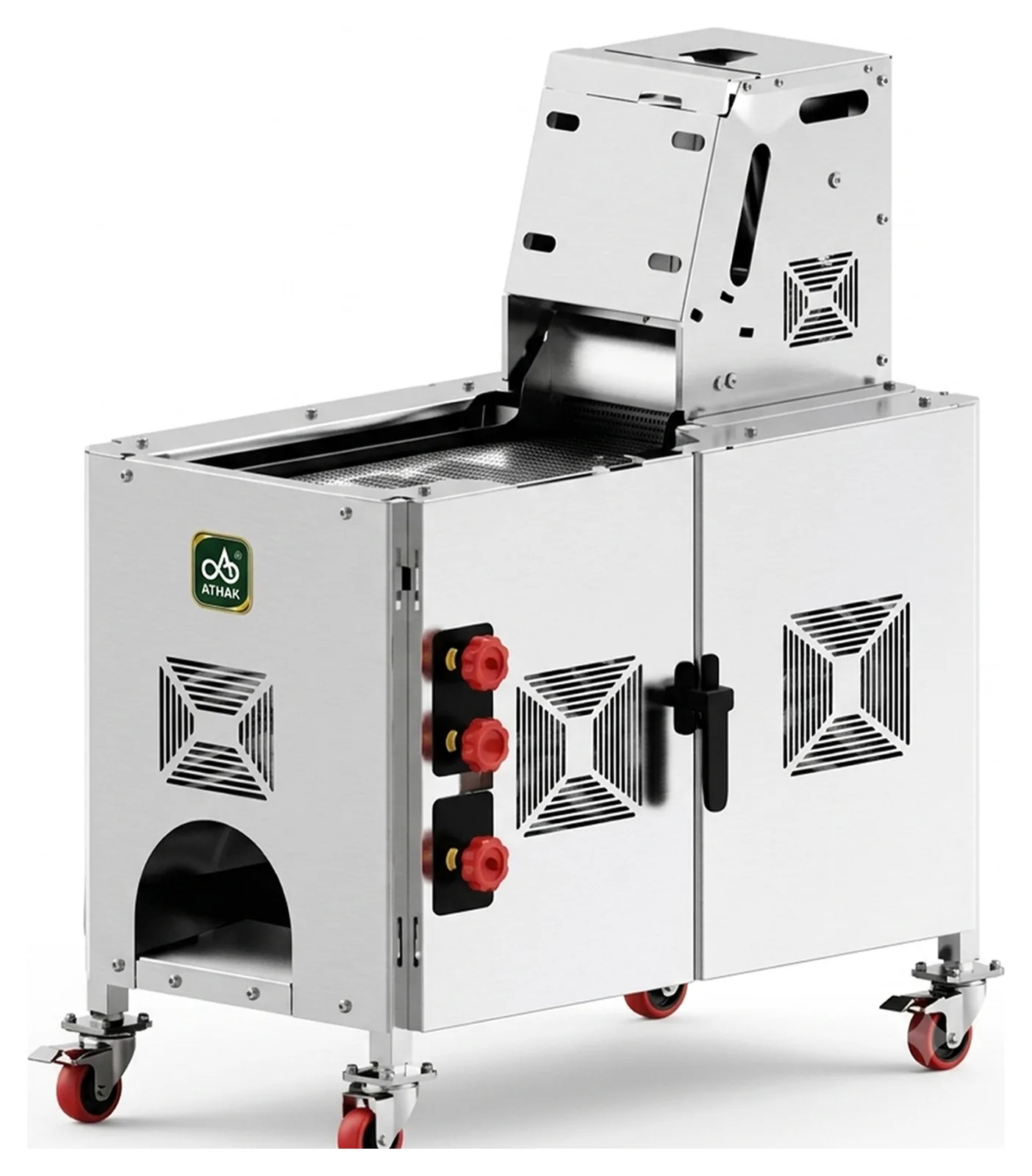
Automatic Roti Making Machine (Pressing + Roasting) – Eco Series
Eco series automatic roti machine pressing and roasting in one pass, in four models rated 300 to 1000 roti per hour.
4 modelsView details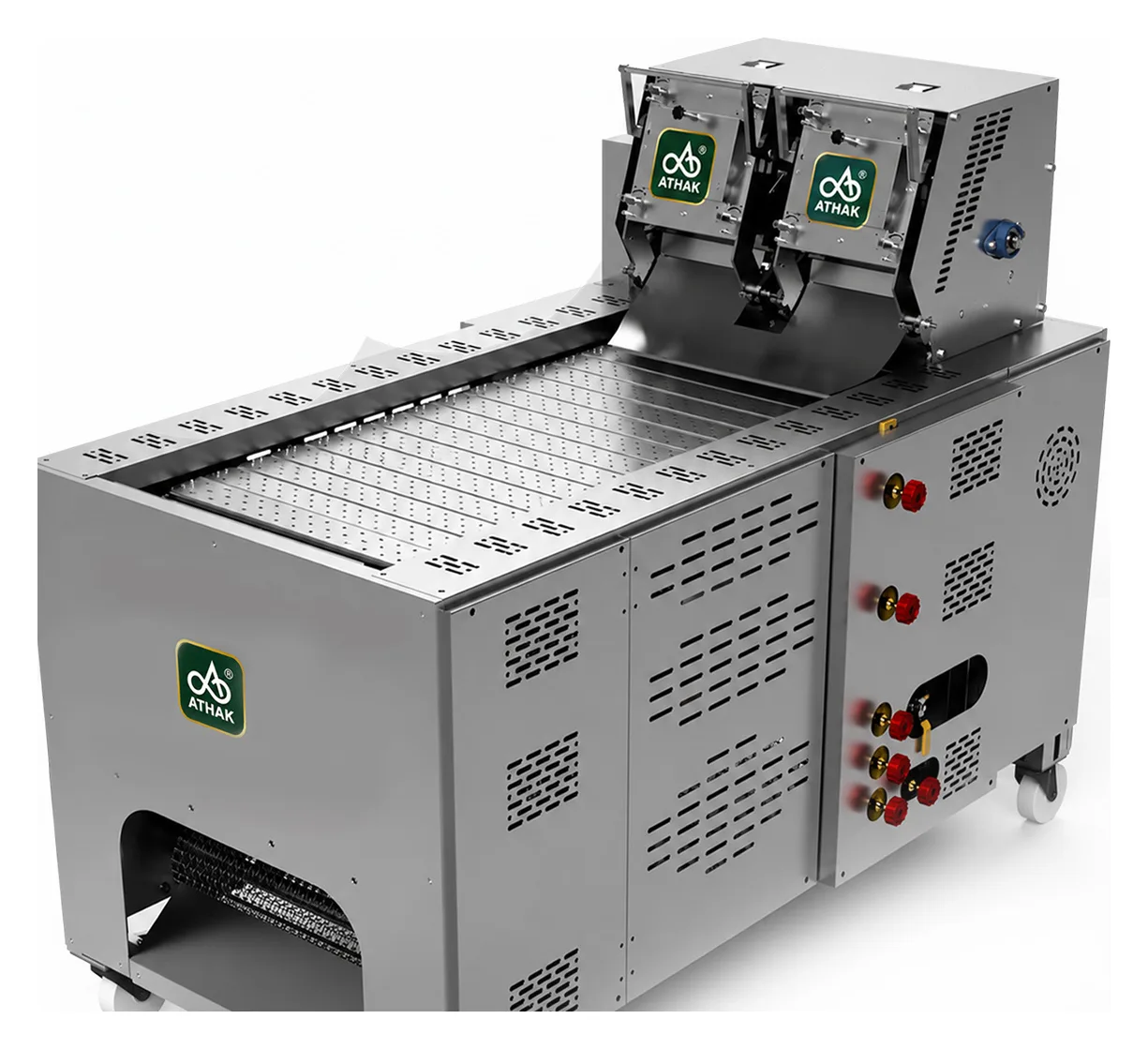
Automatic Roti Making Machine (Pressing + Roasting) – PRO Series
Automatic roti machine pressing and roasting in one pass, in four PRO models rated 500, 700, 1000 and 2000 roti per hour.
4 modelsView details
Choosing Between Models
Eco vs. PRO, and Pressing Alone vs. a Combined Line
The Eco and PRO automatic roti making machine series cover the same job — pressing and roasting in one pass — at two different capacity bands. Eco runs 300 to 1000 roti per hour across four models on 230V single phase, with NBR bearings. PRO runs 500 to 2000 roti per hour across four models, with SKF bearings, and its largest model (S 2000 Pro) needs a 415V three-phase supply rather than single phase.
A kitchen that already has separate roasting equipment (a tawa or a chapati bhatti) may not need a combined line at all — the Hand Press Machine, Automatic Press Machine CP-1000 Pro and Automatic Roti Pressing Machine Eco Series are all pressing-only, at 500, 1000, and 300-500 roti per hour respectively, each with a smaller footprint than a full pressing-and-roasting line.
Machine Family
Browse the Full Family
Industries
Used By These Industries
FAQ
Roti Production Questions
How many rotis per hour does a commercial kitchen typically need?
That depends on covers served and the serving window, which ATHAK has not published a fixed formula for. ATHAK's automatic roti making machines are rated from 300 to 2000 roti per hour across the Eco and PRO series, giving a range to match against your own requirement when requesting a quote.
What is the difference between the Eco and PRO automatic roti making machine series?
The Eco Series runs 300 to 1000 roti per hour across four models, all on 230V single phase, with NBR bearings. The PRO Series runs 500 to 2000 roti per hour across four models, with SKF bearings, and its largest model (S 2000 Pro) runs on a 415V three-phase supply rather than single phase.
Can I buy just a pressing machine and use my own roasting equipment?
Yes. The Hand Press Machine, Automatic Press Machine CP-1000 Pro and Automatic Roti Pressing Machine Eco Series are all standalone pressing machines, separate from ATHAK's combined pressing-and-roasting automatic roti machines.
Does ATHAK make a dough kneader sized to match a chosen roti machine's output?
ATHAK does not publish a specific kneader-to-press pairing. Its kneaders are listed by batch size (2-25 KG open-bowl, 7-50 KG enclosed drum) and its roti machines by hourly roti output — share both figures when requesting a quote and ATHAK can advise on a fit.
Get a Quote for Roti Production Machinery
Tell ATHAK which stage you need and your target output, and get pricing for the right models.